FERC Orders All Six U.S. Grid Operators to Fast-Track AI Data Center Connections in 60 Days
The Federal Energy Regulatory Commission unanimously ordered the six major regional grid operators to reform interconnection rules or justify them within 60 days. Electricity demand from data centers is expected to nearly triple through 2035.
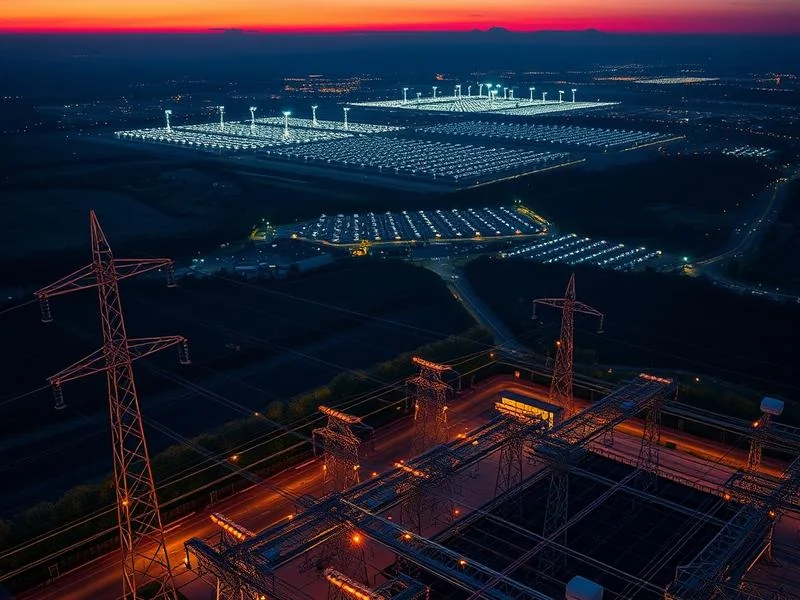
The Federal Energy Regulatory Commission (FERC) voted unanimously on June 18-19, 2026 to order all six major U.S. regional transmission organizations — PJM, MISO, SPP, CAISO, ISO-NE, and NYISO — to either reform their grid interconnection rules or explain in detail why the existing rules still make sense. Deadline: 60 days.
The action arrives under Section 206 of the Federal Power Act, the commission’s authority to require changes to rates, terms, and conditions it finds unjust or unreasonable. FERC’s concern is blunt: the current interconnection queue process was designed for a grid that didn’t have tens of gigawatts of AI data center demand piling up simultaneously.
Electricity demand from data centers is projected to nearly triple by 2035. That number sits at the center of every major AI infrastructure discussion right now — from hyperscaler campus expansions to NVIDIA’s chip shipment forecasts. The grid, however, moves on a different timescale. A typical new data center seeking a grid connection can wait years in queue, a delay that is increasingly incompatible with the pace AI companies are operating at.
The Energy Department flagged this as a national competitiveness issue back in October 2025, and FERC’s unanimous order signals that the political will to act has crystallized. Under the order, data centers are expected to bear their own interconnection costs — no cost socialization across ratepayers.
The six grid operators collectively cover the vast majority of U.S. electricity territory. Getting all six to move in lockstep within 60 days is ambitious. PJM alone manages power for 65 million people across 13 states and D.C. and has one of the most congested interconnection queues in the country. MISO covers the Midwest and part of the South. CAISO handles California. Together, these operators control whether a data center campus actually gets power.
The order doesn’t mandate specific reforms — it mandates a response. Each grid operator must either show they’ve updated rules to handle the AI-driven surge, or demonstrate why the old rules are sufficient. Insufficient answers invite follow-up rulemaking.
For AI companies planning data center buildouts in the U.S., the 60-day clock is meaningful. If grid operators respond with substantive reforms, timelines for new large-load interconnections could shrink from multi-year waits to something more manageable. If the operators push back or propose minimal changes, FERC has the tools to intervene more aggressively.
The AI infrastructure race is increasingly a power infrastructure race. FERC just made it official.
Sources
Related reading
- Policy & Regulation New York Becomes First State to Freeze New Hyperscale Data Centers
- AI Infrastructure NVIDIA and Emerald AI Want AI Data Centers to Power the Grid, Not Just Drain It
- Cloud & Infrastructure Amazon Is Behind a 7.65 GW Gas Plant in Texas — Set to Be America's Biggest CO2-Emitting Power Station