Amodei, Altman, and Hassabis Take the G7 Stage to Push U.S.-Led Global AI Governance
The CEOs of Anthropic, OpenAI, and Google DeepMind joined world leaders at the G7 in France to advocate for a U.S.-led multilateral framework governing frontier AI. No binding commitments emerged, but the convergence of political and industry power in the same room marked a shift.
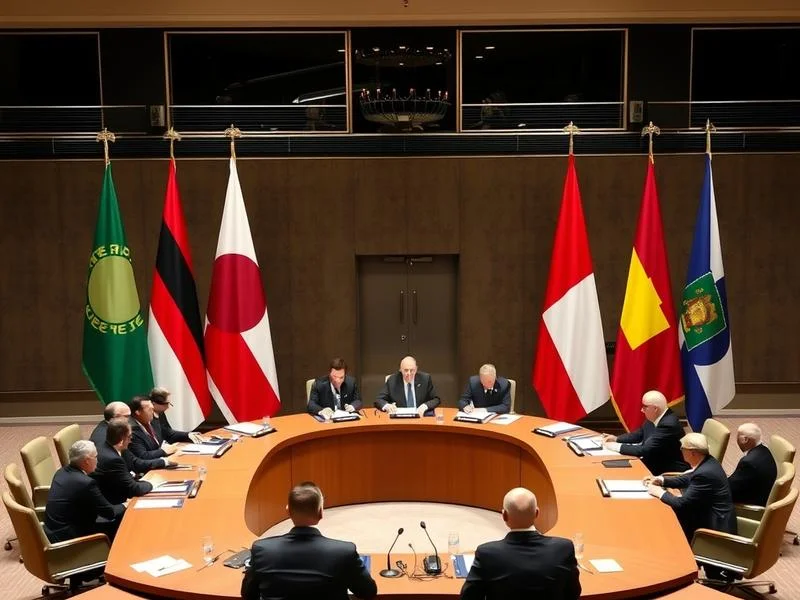
At the G7 summit in Évian-les-Bains, France this week, three of the most powerful figures in frontier AI sat in the same room as heads of state to argue for a common global governance framework — on American terms.
Dario Amodei (Anthropic), Sam Altman (OpenAI), and Demis Hassabis (Google DeepMind) were among roughly a dozen tech executives present alongside G7 leaders including President Trump, Canadian Prime Minister Mark Carney, and representatives from the EU, Japan, and the UK. The meeting was characterized as an exchange of views rather than a formal negotiating session. No binding commitments emerged. But the optics matter.
Amodei’s position was the sharpest: he proposed coordinated chip export controls limiting China’s access to frontier AI hardware, paired with shared access protocols for the models themselves. The argument is that U.S. leadership in AI is only strategically meaningful if adversaries can’t close the gap by purchasing the same chips. It’s a position that aligns with existing Commerce Department export restrictions but goes further in calling for multilateral enforcement.
Altman pushed for a global AI safety testing forum with common benchmarks — a more technocratic ask that builds on OpenAI’s existing work with national governments on safety evaluations. If successful, it would effectively export OpenAI’s safety methodology as an international standard.
Hassabis focused on the case for treating AI governance as analogous to nuclear non-proliferation: you need the original possessors of the technology to set the rules before the technology spreads too widely.
Canadian PM Carney signaled openness to U.S. leadership on the framework. The EU’s position was less clear, given its existing AI Act framework that the three executives would likely view as overly restrictive. Japan has been a reliable partner on AI governance coordination through the Hiroshima AI Process.
What makes this meeting more than a photo opportunity is the alignment between the executives’ interests and U.S. government policy. The Trump administration’s approach to AI governance has been explicitly competitive — AI leadership as a national security asset — rather than precautionary. That creates rare common ground between Silicon Valley and Washington.
The 60-day follow-up from FERC on data center power (announced the same week) and the G7 AI discussions are part of the same story: governments are now treating AI infrastructure and AI governance as strategic policy terrain, not just industry matters. The executives who showed up in France understood that. The question is whether the governments leave with anything more than a shared photo.