U.S. Government Bans Anthropic's Fable 5 and Mythos 5 Globally — Ten Days In, No Fix in Sight
The US Commerce Department ordered Anthropic to suspend Fable 5 and Mythos 5 for all foreign nationals on June 12, forcing the company to pull both models offline worldwide. Today marks the original pricing transition date — and the models are still dark.
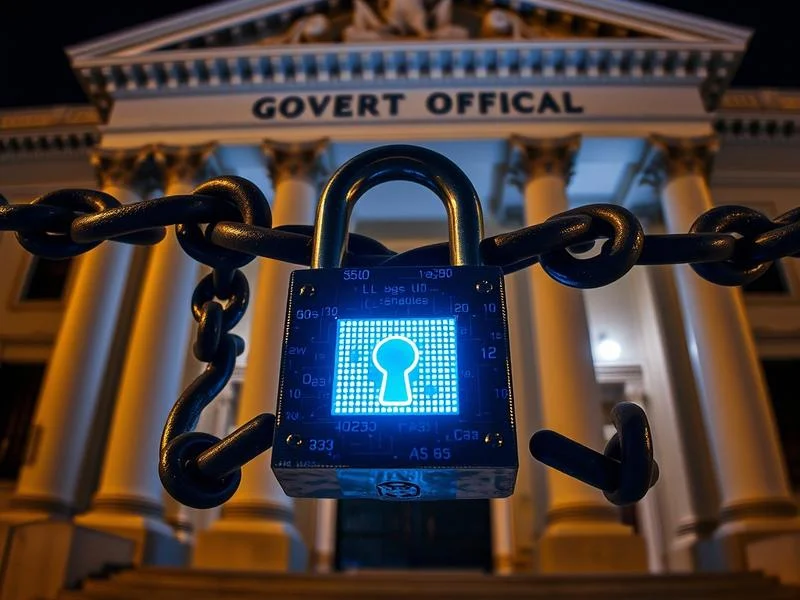
On June 12, 2026 at 5:21 PM ET, Anthropic received a directive from the U.S. Department of Commerce ordering it to suspend access to Claude Fable 5 and Mythos 5 for all foreign nationals — whether inside or outside the United States, including Anthropic’s own non-citizen employees. Unable to filter users by nationality in real time, Anthropic pulled both models for everyone worldwide within hours. They have not come back.
Today, June 22, marks ten days since the ban began. It also marks the day Fable 5 was originally scheduled to transition from free-trial pricing to paid usage credits at $10 per million input tokens and $50 per million output tokens. That transition is irrelevant. The refund window for unused credits closed June 20.
What triggered the ban
The government told Anthropic it had learned of a technique to bypass Fable 5’s safety safeguards. Anthropic reviewed a live demonstration of the method and concluded it exploited “a small number of previously known, minor vulnerabilities” — the same category of jailbreak that exists across all frontier models, including OpenAI’s GPT-5.5, which remains live.
White House AI policy co-chair David Sacks then issued what security researchers are calling an impossible demand: either eliminate all potential jailbreaks from Fable 5, or de-deploy it permanently. Anthropic CEO Dario Amodei refused both options. He argued that if this standard were applied consistently across the industry, it would functionally halt every new frontier model release from every provider. More than 100 cybersecurity leaders signed an open letter demanding reversal of the directive.
The standoff
Anthropic opened its Seoul office on June 17-18, where managing director Chris Ciauri told attendees the models would return “within days.” That statement has not aged well. Prediction markets now put restoration odds at 57% before July 1 and 75% by July 17.
Both sides are reportedly negotiating an alternative framework — a monitoring arrangement rather than the impossible zero-jailbreak standard — but no agreement has been announced. The talks have been complicated by what Anthropic describes as the government’s fundamental misunderstanding of how frontier model security works in practice.
The stakes
The Economist ran a cover story this week titled “America’s AI Power Grab,” framing the export control order as treating advanced AI like nuclear technology or controlled semiconductors. That framing matters. If the precedent holds, the U.S. government has established a mechanism to unilaterally pull any frontier AI model from the global market on national security grounds, with no clear standard, no review timeline, and no appeals process.
For the 245 million monthly active Claude users worldwide, the practical impact is total loss of access to Anthropic’s two most capable models. Less powerful models — including Claude Opus 4.8 — were not affected. Anthropic’s API, developer console, and Claude.ai all remain operational for those tiers.
For Anthropic specifically, the timing is brutal. The company filed a confidential S-1 on June 1, targeting a $900-960 billion valuation and an October 2026 IPO. Having your flagship model suspended by government order ten days after launch is not an ideal pre-IPO development.
The situation also accelerated a trend already visible before June 12: open-weight Chinese models filling the gap left by offline Western ones. GLM-5.2 from Zhipu AI — released while Fable 5 was being banned — benchmarks within one point of Fable 5 on FrontierSWE and at one-sixth the cost. Competition does not pause for regulatory disputes.
Sources
Related reading
- AI Policy 1,178 AI Employees Ask Governments to Build a Kill Switch for Frontier AI — OpenAI and Anthropic Back It
- AI Policy Amodei, Altman, and Hassabis Take the G7 Stage to Push U.S.-Led Global AI Governance
- AI Policy Sen. Warren Calls Pentagon's Blocking of Anthropic 'Retaliation' for Refusing Surveillance Tools