Amazon Is Behind a 7.65 GW Gas Plant in Texas — Set to Be America's Biggest CO2-Emitting Power Station
Amazon is backing the GW Ranch plant in Pecos County: 35 gas turbines generating 7.65 gigawatts for a new AI data center campus, permitted to emit 33 million tons of CO2 a year. That would make it the largest single CO2 source among US power plants.
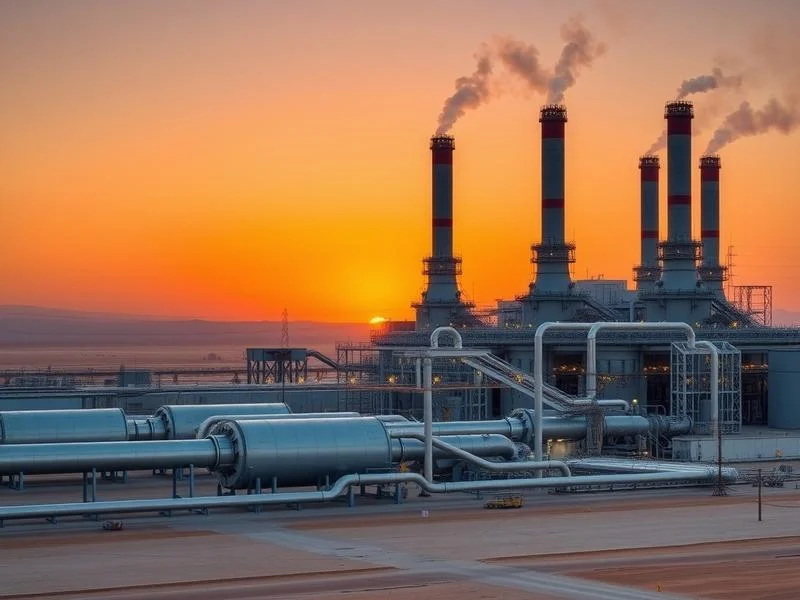
Amazon is backing what would become the most polluting power plant in the United States. The company acquired a site tied to GW Ranch, a natural gas project in Pecos County, West Texas, developed by Pacifico Energy — 35 gas turbines producing up to 7.65 gigawatts, dedicated to powering a new AI data center campus. Texas has permitted the plant to emit up to 33 million metric tons of CO2 per year, a figure that exceeds every power plant currently operating in the country.
The scale is hard to overstate. 7.65 GW is roughly seven large nuclear reactors’ worth of capacity, built as a private, behind-the-meter power source. Amazon will buy electricity directly from the facility rather than drawing from the Texas grid — at least initially — which means one of the biggest generation projects in America will exist to serve a single customer’s AI workloads.
Amazon’s defense has two parts. First, going off-grid shields Texas ratepayers from funding new grid infrastructure to serve AI demand — a real concern, since datacenter-driven price increases are already a political issue in several states. Second, the company says it is “exploring opportunities” for on-site solar and battery storage and will use non-potable brackish groundwater for cooling, avoiding pressure on the local watershed. Amazon also insists it remains “committed to its goal of being carbon neutral by 2040.”
That last claim is where the numbers stop cooperating. A plant permitted for 33 million tons of annual CO2 — more than some entire countries emit — is not a rounding error against carbon offsets and renewable energy credits. Amazon spent years touting itself as the world’s largest corporate purchaser of renewable energy. GW Ranch reveals what happens when the AI buildout meets physical reality: solar and wind can’t deliver firm, 24/7 gigawatt-scale power on the timeline the compute race demands, nuclear takes a decade, and so hyperscalers are quietly reverting to gas.
Amazon isn’t alone. Meta, Microsoft, and xAI have all signed gas deals or built gas capacity for AI campuses in the past eighteen months, and Amazon itself is simultaneously investing in nuclear. But GW Ranch is the largest and most explicit commitment yet, and it sets a precedent: the biggest new emitters in the US power sector will be tech companies, not utilities.
For developers and startups, the practical takeaway is about cost trajectories. Compute pricing ultimately tracks energy pricing, and hyperscalers building private gigawatt-scale generation are making a decades-long bet that AI demand justifies it. The 2040 carbon-neutral pledges will need increasingly creative accounting to survive contact with that bet.
Sources
Related reading
- Cloud & Infrastructure AWS Launches Graviton5, Blackwell GPUs, and Bedrock AgentCore at New York Summit
- Big Tech AWS Grows 37% and Amazon Still Can't Keep Up — Jassy Hikes 2026 Capex to $220 Billion
- Big Tech Amazon's AI Chief Admits Its Models Trail OpenAI and Anthropic — Promises to Close the Gap in 12 Months