Trump's White House Releases Its National AI Policy Framework
The Trump Administration unveiled a four-page National Policy Framework for AI on March 20, calling on Congress to pass federal legislation that would preempt most state-level AI laws. Seven policy priorities cover child safety, IP, free speech, and state preemption.
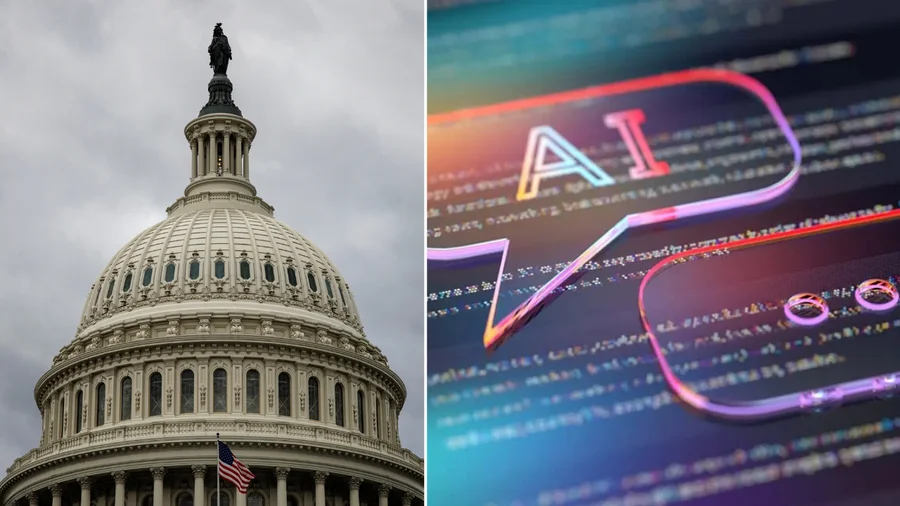
The Trump Administration released its National Policy Framework for Artificial Intelligence on March 20, calling on Congress to codify seven priorities into federal law. The document is four pages. It is not binding. But it is the clearest signal yet of how the administration wants AI to be regulated — and, equally importantly, what it wants to prevent states from doing.
The core move is preemption. The White House wants a single national framework that overrides most state-level AI laws. White House science adviser Michael Kratsios put it plainly: “We need one national AI framework, not a 50-state patchwork.” This directly targets efforts in states like California, Colorado, and Texas to pass their own AI liability and transparency requirements. The logic from the administration’s perspective is straightforward: fragmented state laws create compliance complexity that disadvantages US AI companies against Chinese competitors who operate under a single regulatory regime.
The seven priorities in the framework: child safety (age verification, parental controls, reduced exploitation risk), communities and infrastructure (streamlined permitting for data center power generation), intellectual property (leaving AI training copyright questions to the courts, not Congress), free speech (blocking federal coercion of AI providers to alter content), innovation (regulatory sandboxes, reliance on existing sector-specific regulators), workforce development (AI education programs, non-regulatory approaches), and state law preemption.
What the framework explicitly does not do: create a new federal AI regulatory body. The administration is betting on existing sector-specific regulators — the FDA for health AI, the SEC for financial AI, the FTC for consumer protection — rather than a dedicated AI agency. The EU’s approach, which involves a standalone AI Act with its own enforcement structure, is the model being rejected here.
The IP section is deliberately cautious. The framework acknowledges “ongoing judicial resolution” of whether AI training on copyrighted material constitutes fair use — which means the administration is not taking a side on the lawsuits currently working through the courts involving OpenAI, Anthropic, Google, and others. That’s a significant omission given how central training data questions are to the AI industry’s future liability exposure.
Congressional reception was split on party lines. House Speaker Mike Johnson and senior Republicans immediately signaled support. Democrats introduced the GUARDRAILS Act on the same day, aimed at blocking Trump’s December 2025 executive order from taking effect and preserving state authority to regulate AI. Sen. Marsha Blackburn introduced the TRUMP AMERICA AI Act to codify the framework’s priorities.
The path to actual legislation is uncertain. Passing a comprehensive federal AI bill before the 2026 midterms is considered unlikely by most AI policy observers. What the framework does in the near term is set negotiating stakes and give the administration a position to hold in any compromise legislation.
For AI companies, the practical implication is operating in a hybrid environment: existing state laws still apply, the framework provides no safe harbor, and federal legislation is months to years away at minimum. The framework’s existence does make the administration’s priorities clear enough to inform lobbying strategies and compliance planning.
The full document is available on the White House website. It’s worth reading in full — at four pages, it’s less dense than most terms of service agreements.