The White House Wants to Kill State AI Laws Before They Take Root
The Trump administration released a six-pillar AI legislative framework urging Congress to preempt state AI laws and codify a federal light-touch approach by year's end. It is the most concrete signal yet of where federal AI regulation is headed.
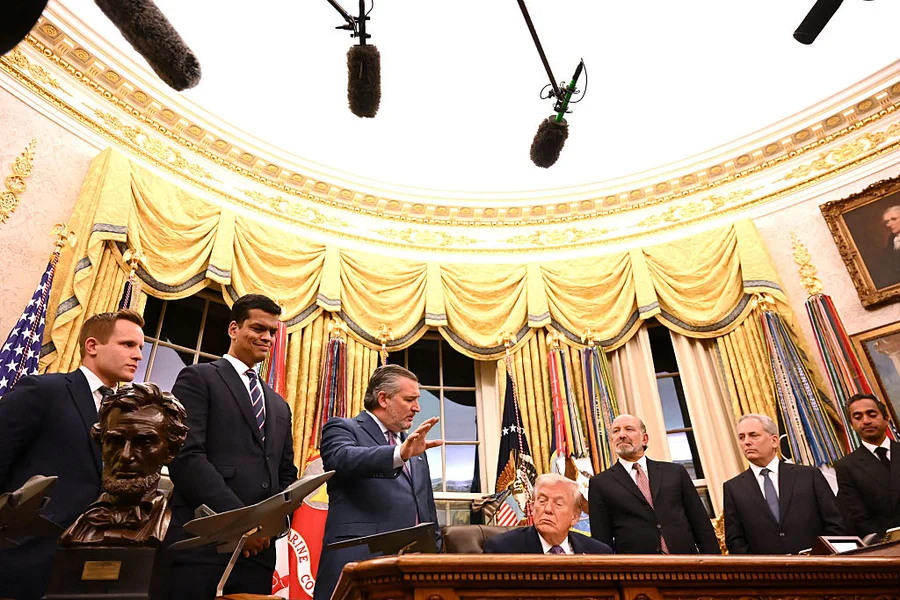
The Trump administration dropped its hand on Thursday. After months of executive orders and signals, the White House published a formal legislative framework telling Congress exactly how it wants to regulate artificial intelligence — and the first priority is making sure states cannot do it themselves.
The document, titled the National Policy Framework for Artificial Intelligence, lays out seven pillars: child and parent protections, community safety, intellectual property, free speech and anti-censorship, innovation and American AI dominance, workforce education, and a preemptive federal layer that explicitly blocks state-level AI laws. That last pillar is the one the industry has been waiting for.
The push follows Trump’s December 2025 executive order, which instructed federal agencies not to enforce state AI rules in conflict with federal interests. This framework asks Congress to make that preemption permanent in statute. The administration wants a bill on Trump’s desk before the year is out.
On the infrastructure side, the framework calls for streamlined data center permitting and capped developer liability — two things Big Tech has lobbied for aggressively. It also mandates new tools giving parents controls over children’s AI-driven digital environments, which gives the document bipartisan appeal without softening its deregulatory core.
What is notably absent is any mention of mandatory safety evaluations, compute thresholds, or audit requirements for frontier models. The framework reads as a growth document, not a guardrails document.
The reaction from state capitals has been predictably cool. California, Colorado, and Texas all have pending AI bills that would be wiped out under this approach. Whether Congress has the bandwidth to move quickly — and whether any preemption language can survive a Senate filibuster — is an open question.
But the direction is unambiguous. Washington wants one set of AI rules, set by Washington, and it wants them light. For developers and companies building on U.S. infrastructure, that is mostly good news. For civil society groups who have spent years pushing for enforceable state-level protections, the clock just started ticking.
The full framework PDF was published at whitehouse.gov on March 20.