Samsung Crosses $1 Trillion Market Cap — HBM4 Production and 750% Profit Surge Drive Historic Rally
Samsung Electronics' stock surged 14% on May 6, pushing it past the $1 trillion market cap mark — only the second Asian company to reach that milestone. The rally was fueled by AI memory chip demand and Q1 2026 profits that rose 750% year-over-year.
Samsung Electronics crossed the $1 trillion market capitalization threshold on May 6 after shares surged 14.41%, closing at 266,000 won on the Seoul exchange — the biggest single-day gain in the company’s history.
The milestone makes Samsung only the second Asian company to join the $1 trillion club, behind TSMC. At its intraday peak, Samsung’s market cap reached approximately $1.206 trillion.
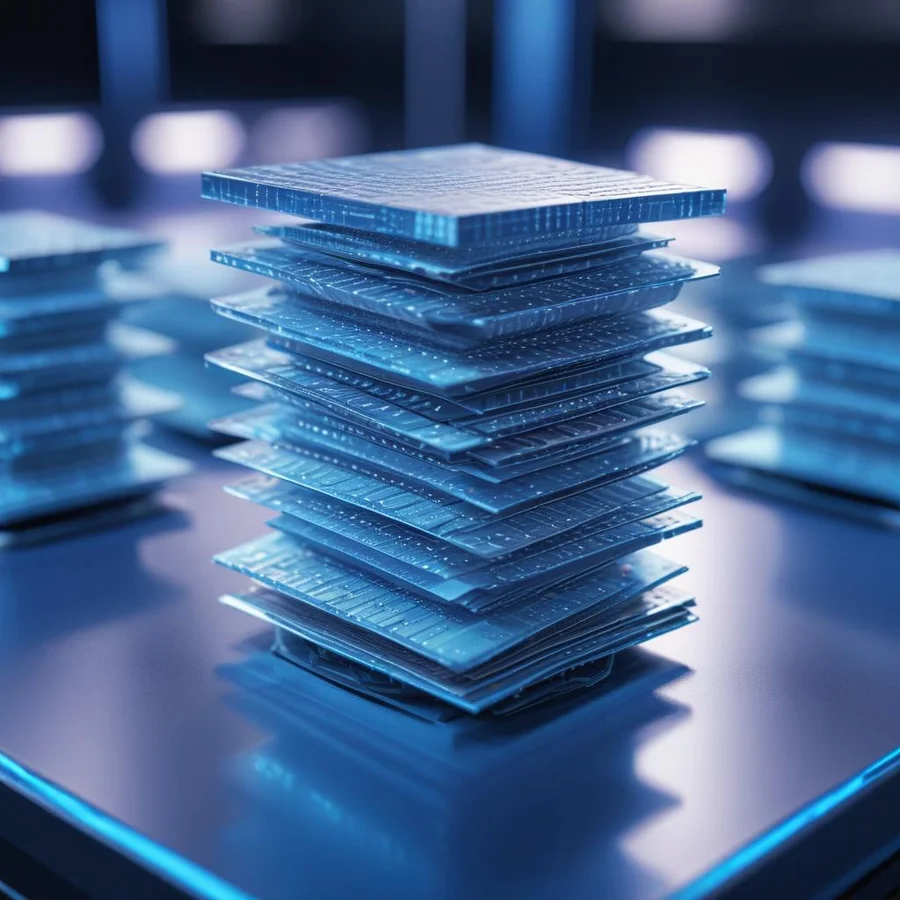
The catalyst is unmistakably AI. Samsung reported Q1 2026 profits that rose 750% year-over-year, almost entirely on the back of HBM (High Bandwidth Memory) orders from hyperscalers and AI chip vendors. The company began mass production of HBM4 — the next generation of AI memory — in February 2026, becoming the first chipmaker in the world to do so at scale.
Demand for HBM has made Samsung’s memory division the most profitable business in consumer electronics. Hyperscalers training large language models require vast pools of high-bandwidth memory, and Samsung’s ability to scale HBM4 production ahead of Micron and SK Hynix gives it a structural advantage heading into the second half of 2026.
The broader market reflected the sentiment. South Korea’s Kospi index gained more than 6% on the day, crossing the 7,000-point mark for the first time in its history. Samsung alone accounts for roughly 20% of the Kospi’s weighting, so it effectively dragged the national index to a record.
For context: Samsung’s stock was up nearly 400% year-over-year heading into May. The company had spent most of 2025 mired in HBM3e qualification failures with NVIDIA, falling behind SK Hynix. That narrative has fully reversed. Samsung’s HBM3e chips were certified for NVIDIA’s GB300 platform in Q4 2025, and HBM4 production scale has only widened the competitive gap since.
The question now is how long Samsung can sustain this trajectory. TSMC still commands a premium on advanced logic — its market cap stands around $1.4 trillion — but Samsung’s combined logic-and-memory model gives it unique leverage in the AI supply chain. No other company can design, fabricate, and package both the compute die and the HBM stack under the same roof.
SK Hynix remains the nearest threat in HBM specifically. It holds the largest share of HBM3e supply to NVIDIA and has its own HBM4 roadmap. But Samsung’s February head start in mass production is not easily closed within a single product cycle.
The broader semiconductor rally reflects a market that has accepted one thing as settled: AI infrastructure buildout is not slowing down. Every major hyperscaler has raised its 2026 CapEx guidance. Every additional H100 or GB300 deployed means more HBM. Samsung has positioned itself at the center of that demand curve, and investors are pricing in years of it.