Pony.ai Debuts World's First L4 Autonomous Light Truck at Auto China 2026 — 40% Cheaper Than Human Drivers
Pony.ai unveiled a fully automotive-grade Level-4 electric light truck co-developed with CATL at Auto China 2026, alongside a Gen-7 robotaxi priced under $31,700 total. The company is deploying 1,000 Toyota bZ4X-based robotaxis across Chinese tier-1 cities this year.
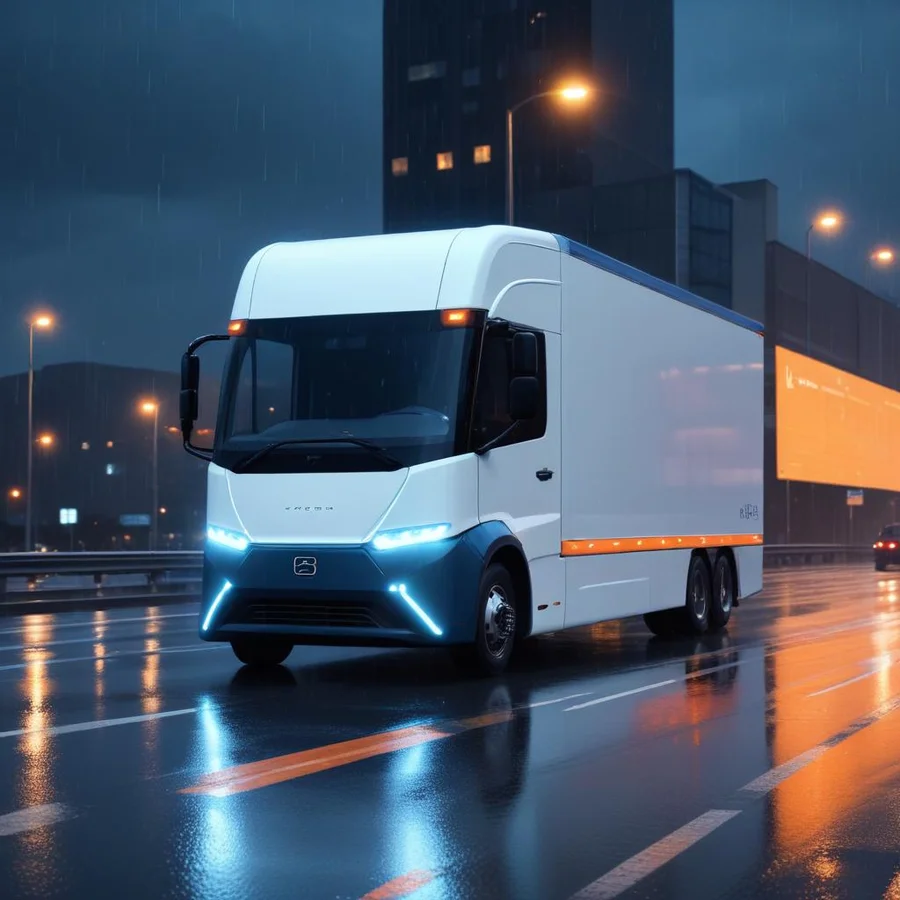
Pony.ai used Auto China 2026 on April 24 to unveil what it calls the world’s first fully automotive-grade, fully redundant Level-4 electric light-duty truck — built on CATL’s Kunshi chassis platform. The numbers are significant: 18 cubic meters of cargo capacity, a range of 320 to 450 km, and a projected freight cost that is 40 to 50 percent lower per kilometer than human-driven alternatives.
Full hardware redundancy across every critical system — steering, braking, communications, power, compute, and sensors — is standard on the truck. That level of redundancy has been the norm for passenger robotaxis but has not previously been achieved in the light-freight segment. CATL’s Kunshi platform provides the battery and chassis foundation; Pony.ai supplies the autonomous driving stack. The commercial launch timeline was not disclosed, but the vehicle is described as production-ready.
The truck reveal shared the stage with updates to Pony.ai’s Gen-7 robotaxi program. The 2027 model — based on the Toyota bZ4X — is expected to come in below RMB 230,000 total vehicle cost, approximately $31,700, including the autonomous driving kit. That is a hardware cost low enough to make the economics of robotaxi fleets viable without subsidy. Pony.ai has already received an on-road testing permit in Guangzhou and plans to deploy 1,000 Gen-7 units across major tier-1 Chinese cities before the end of 2026.
Alongside the hardware announcements, Pony.ai released PonyWorld 2.0, a major upgrade to the world model powering its Virtual Driver. World models are the core of modern autonomous driving systems: they build an internal simulation of the environment that allows the vehicle to predict how other agents will behave and plan accordingly. Version 2.0 extends the prediction horizon and improves generalization to rare scenarios — the class of edge cases that most autonomy failures come from.
The competitive context is sharp. Waymo is scaling in the United States. BYD’s autonomous unit and Huawei’s ADS 3.0-equipped partners are scaling in China. For Pony.ai, the light-truck play is a differentiation move: passenger robotaxis are crowded; L4 freight logistics is not.
The 40 to 50 percent cost reduction claim will be scrutinized. Human truck drivers in China earn significantly less than their U.S. counterparts, so the cost basis for comparison is lower. The actual savings realized in commercial operations will depend on utilization rates, maintenance costs, and the regulatory environment for driverless commercial vehicles — all of which remain in flux.
What is not in flux: the pace of development. Two hardware platforms, 1,000 vehicles in deployment, and an upgraded world model — all announced on the same day. Pony.ai is moving.
Related reading
- Hardware Ouster's Rev8 Lidar Captures Full Color and 3D Depth in One Sensor — No Camera Required
- Hardware Tesla Tapes Out AI5 Chip — Nearly Two Years Late, Volume Production Not Until Mid-2027
- Big Tech Google Reveals Android 17, Aluminium OS, and XR Glasses at 'The Android Show' — One Week Before I/O