OpenAI's First Hardware Device Is a $300 Camera-Equipped Speaker Designed by Jony Ive
Bloomberg reports the screenless, donut-shaped device has moving parts, ambient lighting, and a camera meant to watch what users are doing while they talk to it.
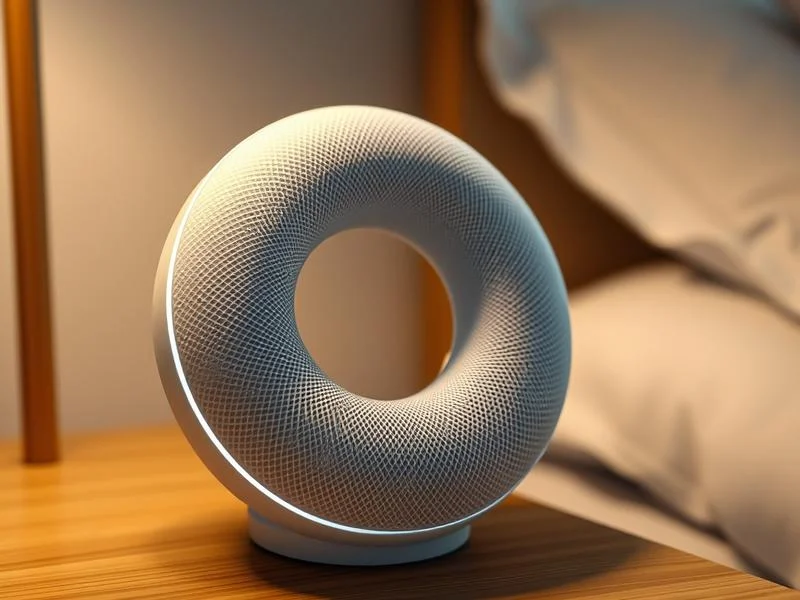
OpenAI’s first piece of consumer hardware, per Bloomberg, is a donut-shaped, screenless smart speaker priced around $300, designed with Jony Ive’s studio LoveFrom. It has moving parts that shift during interactions, ambient LED lighting that signals when the AI is listening or responding, and a built-in camera.
The camera is the detail worth sitting with. Bloomberg’s own framing was blunt: “a camera to watch what you are doing.” OpenAI hasn’t published privacy specifics — what’s processed on-device, what’s sent to servers, retention windows, whether it’s always-listening or push-to-talk — and until it does, “AI companion that watches your room” is going to be a hard sell regardless of industrial design pedigree.
The pitch is an “AI-first computer”: no app grid, no screen, just ongoing voice conversation modeled on ChatGPT’s existing Voice Mode, with the underlying models tuned to build up personalization over time. That’s a direct shot at Amazon’s Echo and Google’s Nest line, except OpenAI is betting the wedge isn’t a smarter Alexa, it’s a device built around a frontier LLM from the ground up rather than a voice assistant with a chatbot bolted on afterward.
Ive’s design language — no screen, physical presence, movement and light standing in for a display — echoes the same philosophy Humane tried with the AI Pin and Rabbit tried with the R1, both of which failed commercially. What’s different this time is distribution: OpenAI has 800+ million weekly ChatGPT users to cross-sell into, plus its own frontier models instead of licensing someone else’s. That’s a materially stronger starting position than either of the earlier flops had.
No firm release date yet; industry chatter points to sometime in 2027. Given the camera question is still open, expect that to dominate coverage more than the design once OpenAI actually shows the thing.