SK Hynix Launches $28 Billion Nasdaq Listing, Largest-Ever US IPO by a Foreign Company
SK Hynix filed to list ADRs on Nasdaq under ticker SKHY, targeting $28 billion as it rides the HBM memory boom. Pricing is set for Thursday, with trading starting Friday.
SK Hynix filed to list American Depositary Receipts on Nasdaq under the ticker SKHY, targeting roughly $28 billion — the largest US listing ever by a foreign company, and the second-biggest share sale globally after SpaceX’s $85.7 billion IPO last month.
The numbers
The South Korean memory maker is offering 17.79 million common shares via ADR, according to an SEC filing made Monday. Pricing is expected Thursday, with trading set to begin Friday. Demand has already exceeded the number of ADRs available, per deal terms cited in the filing.
The listing surpasses Saudi Aramco’s $25.6 billion 2019 IPO and Alibaba’s similarly sized 2014 offering — a striking marker given SK Hynix has been publicly traded in Seoul since 1996. This is a secondary US listing, not a fresh IPO in the traditional sense, but the scale puts it in rare company.
Why now
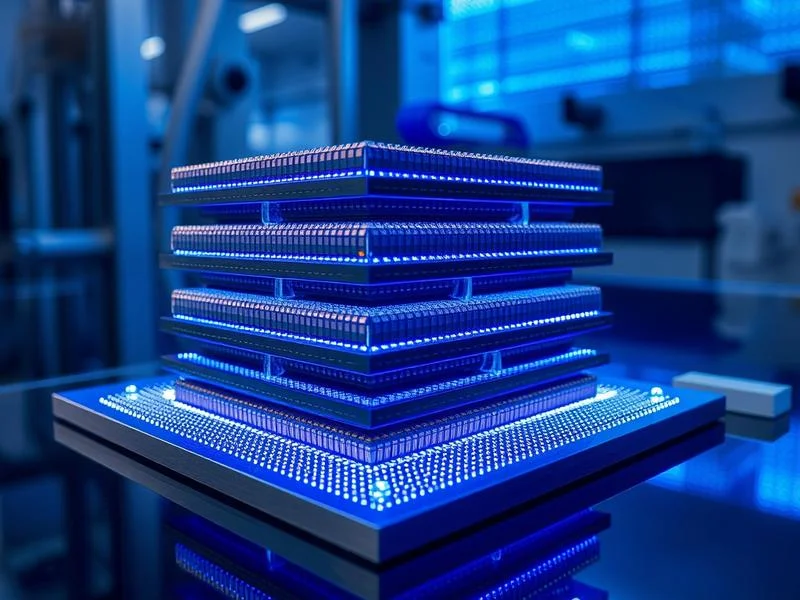
SK Hynix’s revenue grew at an annualized rate of 198% in Q1 2026, and the stock has surged more than 250% in South Korea over the past year, pushing market capitalization past $1 trillion as of May. High-bandwidth memory — the stacked DRAM that feeds GPUs their training and inference data — has become the tightest bottleneck in AI infrastructure, and SK Hynix currently leads that market ahead of Samsung and Micron.
Key customers include Nvidia, Google, and Microsoft, all of whom are racing to secure HBM supply for next-generation accelerators. A US listing gives American index funds and institutional investors direct access to that supply chain for the first time without routing through Korean exchanges.
Where the money goes
Proceeds are earmarked for capital expenditure: expanding production facilities in South Korea and acquiring extreme ultraviolet (EUV) lithography scanners — the machines, made almost exclusively by ASML, required to produce the most advanced memory nodes. EUV scanners cost upward of $200 million each and face years-long order backlogs, so locking in capital now is as much about securing a place in the queue as it is about the cash itself.
Why it matters
The AI buildout has turned memory into as much of a chokepoint as GPU compute itself — Nvidia’s Blackwell and forthcoming Rubin platforms are already memory-bandwidth-constrained, not just compute-constrained. A $28 billion war chest lets SK Hynix pre-commit to fab capacity years ahead of demand, the same strategy TSMC has used to stay ahead of chip orders. For developers and enterprises watching GPU and HBM pricing, this listing is a direct bet that memory scarcity — not GPU scarcity — is the next constraint on AI compute costs.