XPeng's Robot Unit Raises $900M at a $6.3B Valuation — Before Selling a Single IRON
XPeng's robotics business closed a record round for Chinese embodied AI, backed by IDG, Tencent, and Alibaba. The plan: mass-produce the IRON humanoid by year-end and hit 1,000 units a month.
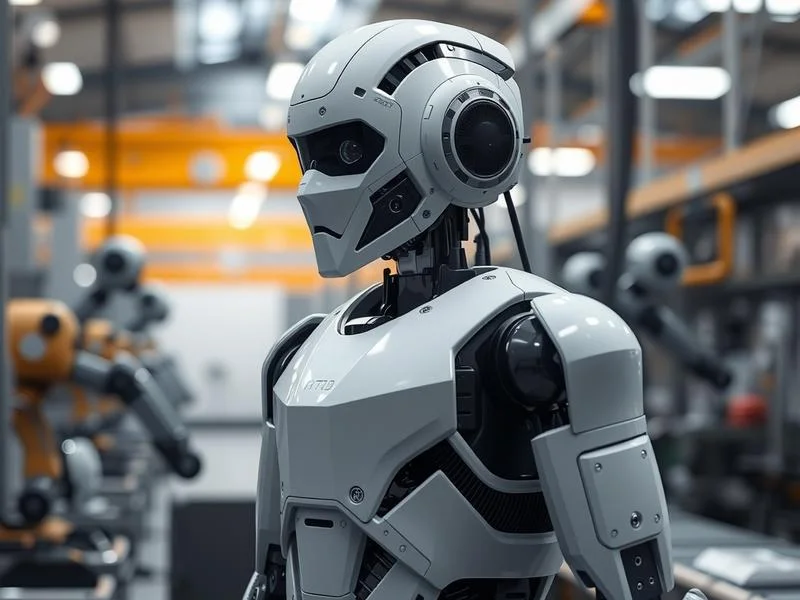
XPeng’s robotics unit raised over $900 million at a $6.3 billion post-money valuation — the largest round ever for a Chinese embodied-AI company, and it landed before the business has sold a single robot.
IDG Capital led the round, with Gaorong Ventures participating and strategic checks from Tencent and Alibaba. The composition is telling: roughly $600 million comes from external investors, about $200 million from an XPeng subsidiary, and around $100 million from the leadership team itself. XPeng is spinning the robotics assets, IP, and staff into a standalone subsidiary over the next 18 months while keeping roughly 82% ownership — consolidated on the group’s books, but with its own market price tag.
The product is IRON, a humanoid robot with 76 degrees of freedom across its body and 21 in each hand. The roadmap is aggressive: mass production by the end of 2026, monthly capacity above 1,000 units, first deployments inside XPeng’s own stores and campuses, then deliveries in China and overseas in 2027. The company has floated a target of 1 million units by 2030.
That last number deserves skepticism. No humanoid maker anywhere has demonstrated demand at even a fraction of that scale, and IRON’s early “customers” are XPeng’s own facilities — a controlled environment that proves manufacturing capability, not market pull. Investors are effectively pricing the option that general-purpose robots become a real category, the same bet Figure and Tesla’s Optimus program are chasing in the US.
The market noticed the tension. XPeng’s NYSE-listed stock fell 6.8% on the news, with analysts pointing at the capital intensity of running an EV price war and a robot moonshot simultaneously.
Still, the structural logic is sound. China’s embodied-AI sector is consolidating around a few well-capitalized players, and XPeng brings something startups can’t match: existing factories, a supply chain already tuned for motors and batteries, and in-house autonomous-driving models that transfer to robot perception. Tencent and Alibaba buying in signals that China’s platform giants want exposure to physical AI without building it themselves.
The next 16 months are the test. If IRON actually ships at 1,000 units a month by late 2026, XPeng will have done something no Western competitor has: turned a humanoid demo into a production line. If it slips, this round marks the top of China’s embodied-AI funding cycle.
Sources
Related reading
- AI Models Google DeepMind Ships Gemini Robotics 2, Giving Humanoids Whole-Body Control and Five-Finger Dexterity
- Hardware NVIDIA Halos for Robotics: The Industry's First Full-Stack Physical AI Safety System
- Hardware NEURA Robotics Raises Up to $1.4B at $7B Valuation — Nvidia, Amazon, and Tether Bet on Europe's Humanoid Champion