NVIDIA Halos for Robotics: The Industry's First Full-Stack Physical AI Safety System
NVIDIA launched Halos for Robotics, a complete end-to-end safety stack built on 18,600+ engineering years of autonomous vehicle work. Agility Robotics is the first adopter, deploying it in Digit humanoids at Amazon, Toyota, and GXO facilities.
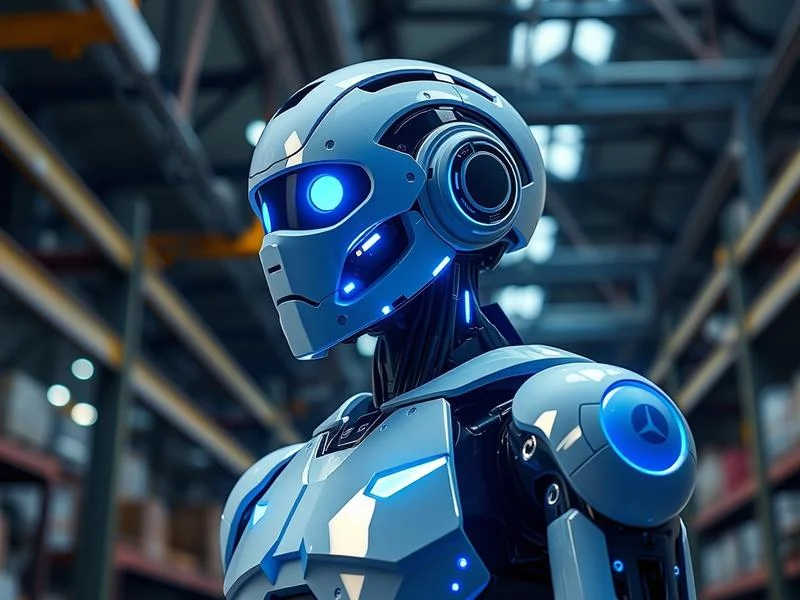
NVIDIA announced Halos for Robotics on June 22–23 — the first full-stack safety system designed specifically for physical AI and humanoid robots. It is not a single product but an entire vertical: hardware, software, certification framework, and inspection lab, all integrated.
The system has three layers. At the bottom is NVIDIA IGX Thor, the industrial-grade compute platform that runs the safety stack in hardware-isolated environments. Above that sits Halos OS, the software layer that monitors robot behavior against certified safety constraints in real time. Capping it is what NVIDIA calls the world’s first ANAB-accredited AI safety inspection lab — a facility that will audit and certify robot systems before they go into production, backed by six major certification bodies including TÜV Rheinland and UL Solutions.
The depth of the engineering behind this matters. NVIDIA says Halos for Robotics is built on 18,600+ engineering years of accumulated work from the automotive autonomous driving space — primarily from DRIVE. That’s not a marketing number; it reflects a decade of compliance work with ISO 26262, SOTIF, and ASIL-D standards, now being translated into a humanoid robot context.
Agility Robotics is the launch partner. Its Digit humanoid robots — already deployed in warehouse operations at Amazon, GXO, Schaeffler, and Toyota Manufacturing facilities — will be the first to run Halos in production. Forty-plus ecosystem partners joined at launch, covering everything from actuator manufacturers to simulation platforms.
Why does this matter now? Humanoid robots are no longer a research curiosity. Amazon confirmed Digit units picking and placing items in live fulfillment centers. GXO is running them in logistics sorting. Toyota is testing them on factory floors. The question stopping enterprise-scale adoption isn’t capability — it’s certification. Facility managers and insurers need documented proof that a robot won’t hurt workers. Halos for Robotics is NVIDIA’s answer to that certification gap.
The timing is also strategically sharp for NVIDIA. The GPU data center business has a ceiling dictated by AI training workloads. Physical AI — robots, autonomous vehicles, industrial automation — is the next expansion layer. Building the safety stack now positions NVIDIA not just as the chip vendor for these systems but as the platform gatekeeper, similar to what it did with CUDA in the ML space.
The Halos OS software and IGX Thor hardware are available now. Certification services through the ANAB lab are expected to begin accepting submissions in Q3 2026.
Sources
Related reading
- Hardware NVIDIA and LG Group Sign AI Factory Partnership Covering Robotics, ADAS, and Sovereign AI
- AI Models Google DeepMind Ships Gemini Robotics 2, Giving Humanoids Whole-Body Control and Five-Finger Dexterity
- Hardware NEURA Robotics Raises Up to $1.4B at $7B Valuation — Nvidia, Amazon, and Tether Bet on Europe's Humanoid Champion