Tesla Launches Unsupervised Robotaxi in Miami, Skipping the Safety-Monitor Phase Entirely
Tesla's Robotaxi service went live in Miami on July 3 with no human safety monitor from day one, its fifth city and first test against Florida's tropical rain and glare.
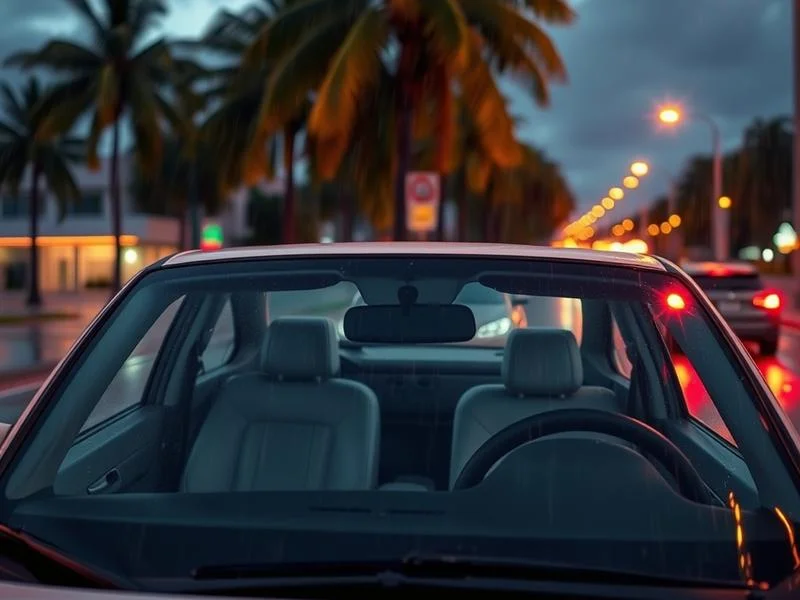
Tesla’s Robotaxi rolled into Miami on July 3, and unlike every prior launch city, there’s no human in the front seat from day one. Austin, Houston, Dallas, and Phoenix all started with a safety monitor riding along before Tesla removed them later. Miami skipped that phase entirely.
The service operates in a geofenced zone of roughly 10 to 14 square miles across western Miami-Dade County, bounded to the north by SR-826, the Palmetto Expressway. It’s Tesla’s fifth Robotaxi city and its first outside Texas.
The bigger story is what Miami tests that Austin never did: weather. Tesla’s Full Self-Driving stack is camera-only — no lidar, no radar redundancy — and South Florida’s sudden, violent tropical downpours plus blinding sun glare are exactly the conditions that have drawn regulatory scrutiny. NHTSA escalated a probe into Tesla’s FSD system in March 2026 after finding the camera-only approach “fails to detect and/or warn the driver appropriately under degraded visibility conditions such as glare and airborne obscurants.” Miami’s climate throws that finding directly at the new deployment, with no safety driver as a backstop.
Tesla stock rallied on the news, with analysts split on what the launch actually proves. Bulls point to it as evidence Tesla’s unsupervised FSD has matured enough to trust in a genuinely harder environment. Skeptics note that a 10-14 square mile zone is easy to cherry-pick for well-mapped roads and that removing the safety monitor is a business decision — it cuts operating cost per ride — as much as a technical milestone.
Elon Musk has set an aggressive 2026 target for unsupervised Robotaxi expansion across multiple cities. Miami is the clearest test yet of whether that timeline holds up against real-world edge cases rather than sunny Texas afternoons. If the geofenced zone survives a full Florida rainy season without an intervention-triggering incident, it becomes Tesla’s strongest evidence yet against NHTSA’s visibility concerns. If it doesn’t, the investigation gets a lot more serious, a lot faster.