OpenAI Is Backing Away From Making ChatGPT a Shopping Portal
OpenAI is pivoting its ChatGPT commerce strategy away from direct in-chat purchasing toward a product research and comparison hub. Walmart is still building a full in-ChatGPT shopping experience, but the broader checkout vision is narrowing.
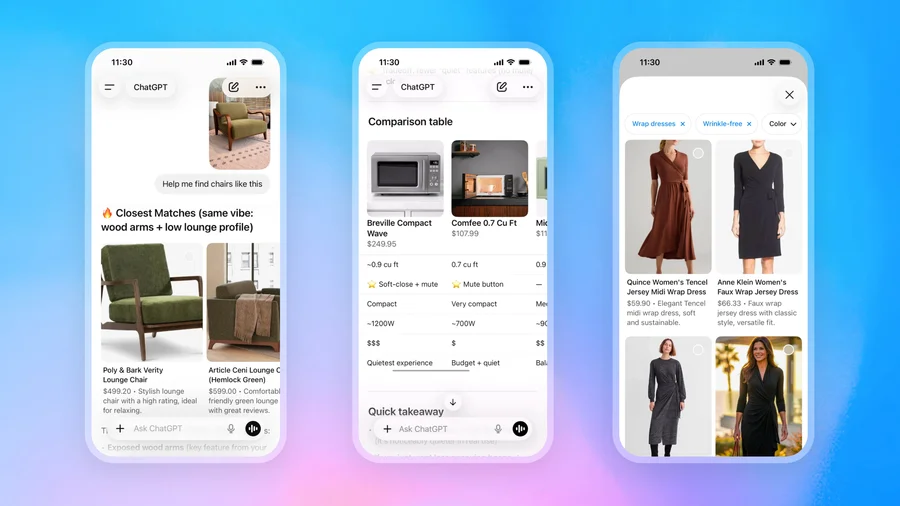
OpenAI is dialing back its ambitions to turn ChatGPT into an e-commerce destination. Less than a year after launching the Agentic Commerce Protocol (ACP) — an open standard for AI-native purchasing — the company is shifting its positioning. ChatGPT won’t be a place to complete purchases. It will be a place to research them.
The pivot is a meaningful concession. OpenAI rolled out ACP with real fanfare and real partners: Walmart, Target, Sephora, Nordstrom, Lowe’s, Best Buy, The Home Depot, and Wayfair were all announced as part of the initial integration wave. The vision was an AI that could take you from intent to receipt without leaving the chat window. Walmart was building a full in-ChatGPT experience with account linking, loyalty points, and Walmart Payments.
That Walmart integration is still moving forward. But the broader checkout-in-ChatGPT story has shifted. According to OpenAI, the new direction puts ChatGPT in the role of an “intermediary research tool” — showing rich product comparisons, side-by-side feature tables, prices, and reviews, then handing off to the retailer’s own checkout flow.
The updated shopping experience already reflects this. Product results are now more visual, with image-based search (upload a photo, find similar products), conversational browsing, and comparison cards with key metrics. What you don’t do is pay inside ChatGPT.
The strategic reasoning isn’t hard to read. Direct purchasing inside a chat interface creates friction around trust, returns, fraud, and payment data. Retailers have existing checkout infrastructure that handles all of that. Asking them to rebuild or route through OpenAI’s payment layer was probably a harder sell than initial announcements implied. The research-hub model lets OpenAI capture value in the discovery and decision phase — where AI genuinely adds something — without needing to become a payment processor.
There’s also a GPT-5.4 mini rollout happening simultaneously this week. The model is available to Free and Go users through the “Thinking” feature, and serves as a rate-limit fallback for GPT-5.4 Thinking on paid tiers. It won’t appear as a selectable option in the model picker. OpenAI also removed the legacy deep research mode on March 26 — the current deep research experience is unchanged, but older conversations that used the legacy mode now route to current defaults.
For retailers, the research-hub model may actually be better positioning. Discovery is where AI can surface products that wouldn’t appear in a keyword search. If ChatGPT consistently surfaces the right product at the research stage, that’s attribution that retailers will pay for — through the ACP platform fees or advertising integrations — without needing to rebuild their checkout experience.
The ChatGPT shopping pivot doesn’t kill the commerce angle; it redraws where OpenAI sits in the purchase funnel. Top of funnel, not bottom. That’s a smaller footprint than the original vision, but possibly a more durable business than trying to compete with Amazon’s checkout infrastructure.
Whether users will consistently come to ChatGPT first when they want to buy something — instead of going to Google Shopping, Amazon, or directly to a retailer — remains the open question.