Nvidia Is Restarting H200 Production for China
Jensen Huang confirmed at GTC that Nvidia has received purchase orders from Chinese customers and is actively restarting H200 manufacturing—ending a roughly 10-month freeze on advanced chip exports to the world's second-largest AI market. Shipments will face U.S. inspections, a 25% duty, and per-customer caps.
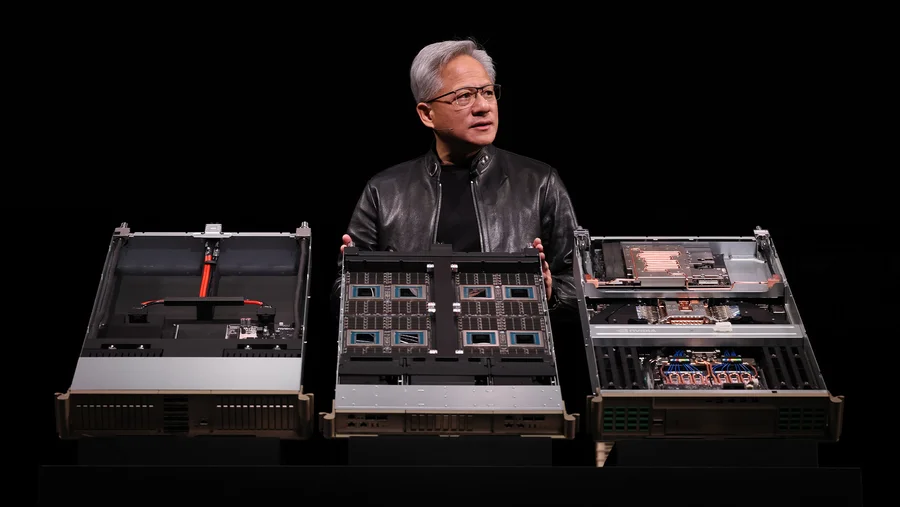
Jensen Huang said it plainly at GTC on Monday: “We have received purchase orders, and we’re in the process of restarting our manufacturing.” After roughly 10 months during which Nvidia generated essentially no revenue from China’s data center market under the current export regime, that sentence moves markets. Nvidia’s stock ticked up on the news. Xiaomi, which has been building AI infrastructure at scale, jumped 5.8% on the Hang Seng Tech Index.
The H200 is Nvidia’s current-generation data center GPU—141GB of HBM3e memory, 4.8TB/s bandwidth, roughly 2x the inference throughput of the H100 on large language models. It’s the chip that every serious Chinese AI lab, cloud provider, and hyperscaler wants. The freeze happened because the U.S. government began requiring export licenses for advanced chip sales to China in April 2025. Until now, those licenses had not translated into cleared shipments.
The conditions attached are meaningful. Every H200 shipped to China will undergo U.S. inspections before delivery, carry a 25% duty, and be subject to caps on how many units a single customer can receive. Those constraints will slow volume and compress margins relative to unrestricted sales, but they’re a workable path to revenue rather than a hard stop.
China previously accounted for at least one-fifth of Nvidia’s data center revenue. The freeze created a vacuum that domestic alternatives—Huawei’s Ascend line and a small number of approved CMOS-era chips—tried to fill. How much of that market Nvidia recovers depends on whether the license-and-cap regime stays stable, whether domestic chips have closed the performance gap further than expected, and how aggressively Chinese cloud providers locked in multi-year commitments to domestic alternatives.
Huang’s phrasing at GTC was precise: “This is new news. Different than it was two weeks ago or three weeks ago.” That suggests the regulatory green light came very recently, likely within days of the GTC announcement. The H200 has not been superseded by Blackwell for all use cases—its memory bandwidth profile makes it preferred for certain inference workloads—so restocking Chinese data centers with H200 is a real near-term revenue event, not just a strategic signal.
Nvidia’s GTC runs through March 19 in San Jose, where the company is also showcasing its Rubin architecture and agentic AI platform. The China news landed in the middle of that narrative, but it’s the item that moves the needle for 2026 revenue guidance.