NVIDIA GTC 2026: Vera Rubin GPUs, NemoClaw Agent Platform, and Physical AI
Jensen Huang's GTC keynote unveiled the Vera Rubin GPU platform with 5x Blackwell performance and NemoClaw, an open-source enterprise AI agent deployment platform.
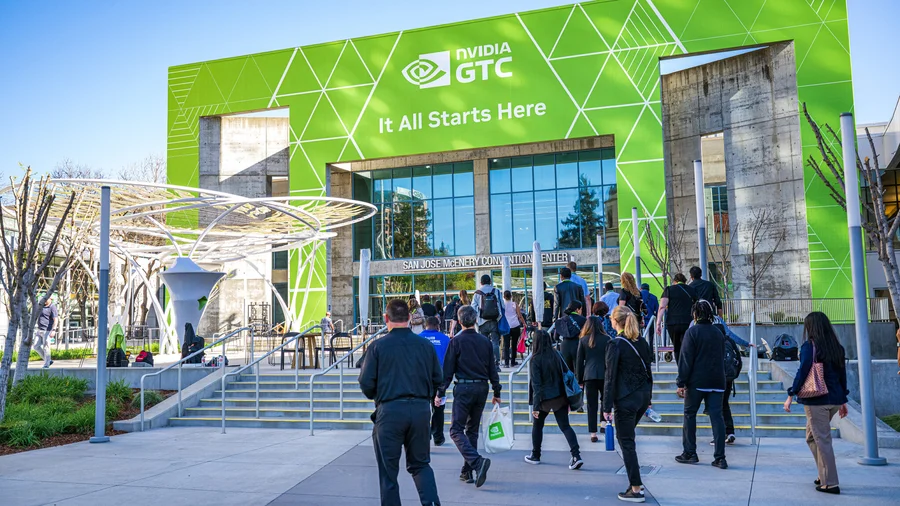
Jensen Huang opened GTC 2026 at the SAP Center in San Jose yesterday, and the announcements spanned the full stack — chips, software, models, and physical AI. Two things stand out for developers building on AI infrastructure: Vera Rubin and NemoClaw.
Vera Rubin: What the Next GPU Generation Actually Means
Vera Rubin is the architecture that replaces Blackwell. The headline spec: up to 288GB of HBM4 memory per GPU and reportedly 5x the dense FP performance of Blackwell.
For developers, this matters in two concrete ways:
Inference cost drops. More memory bandwidth means larger models run on fewer GPUs. Workloads that currently require multi-GPU setups for a 70B model get cheaper. Long-context workloads — the kind that saturate Blackwell’s memory — get more headroom.
Context window ceiling rises. Today’s practical limit on long-context serving is memory, not compute. 288GB HBM4 changes that arithmetic meaningfully. Models with 1M+ context windows that are currently expensive to serve at scale become commercially viable.
The supply chain question remains: Rubin availability won’t be broad until late 2026 at the earliest. But for teams making infrastructure decisions today, knowing what’s coming in 12 months is worth pricing in.
NemoClaw: The Story Builders Should Actually Focus On
NemoClaw is an open-source platform for deploying multi-step AI agents in enterprise environments. It’s NVIDIA’s answer to the messy orchestration layer that every team building production agents currently has to roll themselves.
The core problem NemoClaw solves: there’s no standard way to manage agent lifecycles, tool registries, memory, and observability across a multi-agent system. Most teams cobble together LangChain, custom glue code, and hope. NemoClaw gives that a structured runtime.
Key capabilities:
- Agent lifecycle management — spawn, monitor, and terminate agent processes cleanly
- Tool registry — structured catalog of tools agents can discover and use (directly compatible with MCP)
- Enterprise security model — role-based access controls on what agents can execute
- Observability hooks — log what agents did, when, and why
The open-source release means teams can self-host the orchestration layer instead of being locked into a cloud provider’s agent runtime. That’s significant for enterprise buyers with data residency requirements.
GR00T and Physical AI
The GR00T robotics model updates got significant stage time. Physical AI — models that control robots and autonomous systems — is becoming a first-class compute workload at NVIDIA. This is less immediately relevant for web/software builders but signals where the next generation of agent deployments is heading: out of the browser and into physical systems.
The GTC sessions run through March 19 and are streamed live. The NemoClaw SDK is available now at developer.nvidia.com.
Source: NVIDIA GTC 2026 Keynote, March 16, 2026 — blogs.nvidia.com