GTC 2026 Closes: DLSS 5, Nemotron Coalition, and Jensen's $1 Trillion Projection
NVIDIA's GTC 2026 wrapped in San Jose with the unveiling of DLSS 5's neural rendering, a new Nemotron AI partner coalition including Mistral and Perplexity, and Jensen Huang's projection of over $1 trillion in visible revenue through 2027.
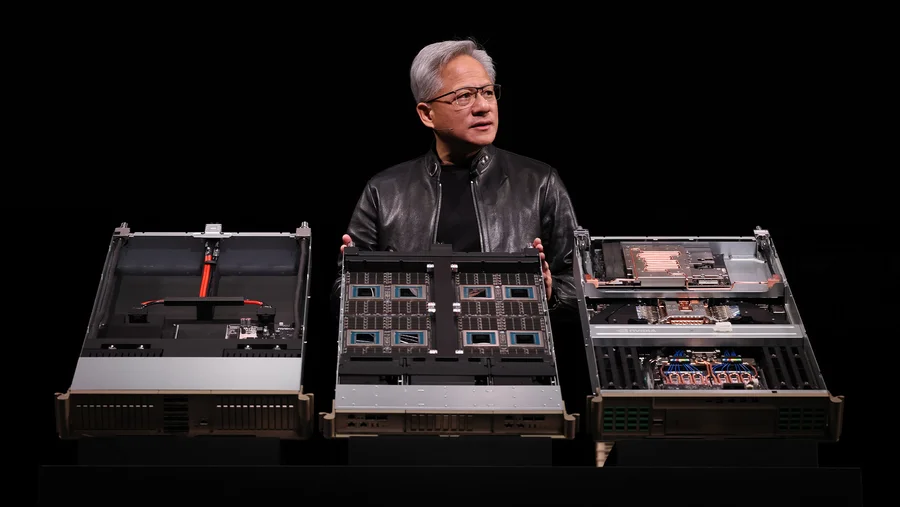
GTC 2026 closed in San Jose on March 19 with NVIDIA extending its announcements beyond the opening keynote. Three things from the conference’s final sessions deserve attention: DLSS 5, the Nemotron coalition, and Jensen Huang’s blunt revenue projection.
DLSS 5: Neural Rendering Goes 3D
DLSS 5 is a significant architectural shift from its predecessors. Where DLSS 4 improved temporal reconstruction from 2D frame data, DLSS 5 uses 3D scene geometry to guide upscaling decisions. The result is more stable reconstructed frames, particularly in scenes with fast motion or thin geometry that have historically broken temporal upscalers.
For the gaming and real-time graphics market, this keeps NVIDIA ahead of competing upscalers — AMD FSR and Intel XeSS still operate primarily on 2D frame data. For the broader AI market, DLSS 5 demonstrates what NVIDIA has spent years arguing: that inference-optimized silicon trained on specific data distributions beats general-purpose hardware for specific tasks.
Nemotron Coalition
The Nemotron coalition is NVIDIA’s move to establish a partner network around its enterprise model family. Founding partners include Mistral AI, LangChain, Perplexity, and Thinking Machines. The partnership structure centers on using Nemotron models as components in larger agent pipelines, with each partner contributing domain-specific tooling or distribution reach.
LangChain’s inclusion is particularly notable. With LangChain present at nearly every enterprise AI stack evaluation, Nemotron models gain immediate surface area across thousands of existing deployments. Perplexity brings retrieval-augmented use cases. Mistral brings EU data residency credibility. Together the coalition addresses the common enterprise objection that NVIDIA’s AI story stops at the chip.
The Nemotron coalition pairs with the NemoClaw orchestration platform announced earlier in the week — coalition partners build on NemoClaw’s agent runtime, creating a vertically integrated enterprise AI stack that NVIDIA owns from silicon to software.
Jensen’s $1 Trillion Projection
Huang said NVIDIA has “at least $1 trillion in visible revenue opportunity” from the Blackwell and Vera Rubin platforms through 2027. The framing was unusual — “visible” implies contracted or committed demand rather than a total addressable market estimate. If accurate, it suggests NVIDIA’s order books are already oversubscribed for the next 18 months.
The context: data center capex across the major cloud providers continues to accelerate. Microsoft, Google, Meta, and Amazon have each signaled hundreds of billions in AI infrastructure spend through 2026 and 2027. NVIDIA holds roughly 85% of the high-performance AI training and inference chip market. The arithmetic is not complicated.
Vera Rubin customer shipments are expected to begin late 2026.
Source: NVIDIA GTC 2026 — blogs.nvidia.com