NVIDIA Launches Cosmos 3 — The First Open Omnimodel for Physical AI Robotics and Autonomous Systems
NVIDIA released Cosmos 3 on June 1, an open-weight foundation model that natively understands and generates text, images, video, sound, and physical actions — cutting robot training cycles from months to days.
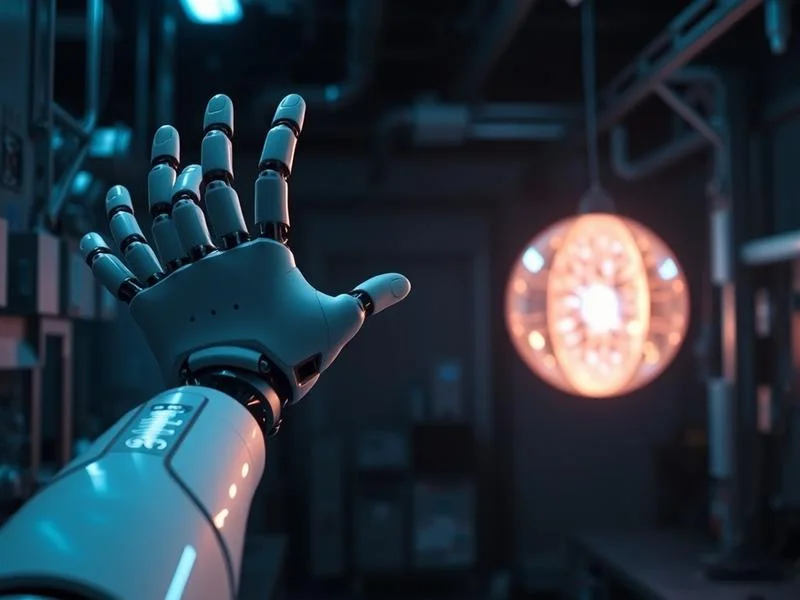
NVIDIA launched Cosmos 3 on June 1, 2026 — the world’s first fully open omnimodel designed for physical AI. Unlike general-purpose language models, Cosmos 3 natively understands and generates text, images, video, ambient sound, and physical actions in a single unified architecture, built specifically for training robots and autonomous vehicles.
The core claim: Cosmos 3 reduces physical AI training and evaluation cycles from months to days.
Architecture
Cosmos 3 runs on a mixture-of-transformers design combining a reasoning transformer with an expert generation transformer. It was trained on 20 trillion tokens of multimodal data — including nearly one billion images, 400 million real and synthetic videos, ambient audio, text, and action data from both humans and robots.
The two launch variants:
- Cosmos 3 Super (32B+32B): targets high-physics-accuracy tasks such as robot policy training and autonomous vehicle simulation
- Cosmos 3 Nano (8B+8B): generates outputs in fractions of a second, suited for real-time inference research
A third variant, Cosmos 3 Edge, is coming soon for real-time inference at the hardware edge.
Both current models are available now on Hugging Face. The technical report is published at NVIDIA Research.
Why Physical AI Is Different
Training a general language model and training a robot policy are fundamentally different problems. A language model needs to predict the next token; a physical AI system needs to predict the consequences of actions in a physical world — gravity, friction, occlusion, collision. Cosmos 3 was trained specifically on action and sensor data from physical environments, not just internet text and images.
The world simulation capability is the key differentiator: Cosmos 3 can generate photorealistic synthetic environments that a robot policy can train inside. That means less time in expensive real-world trials and faster iteration on edge-case scenarios that rarely appear in collected datasets.
The Cosmos Coalition
Alongside the model launch, NVIDIA announced the NVIDIA Cosmos Coalition — a global collaboration of world model builders and AI developers. Founding members include Agile Robots, Black Forest Labs, Generalist, LTX, Runway, and Skild AI. The coalition is structured around advancing next-generation world models rather than any single application area.
What This Means for Developers
Open weights with a permissive license are the story here. Physical AI was previously dominated by proprietary pipelines: NVIDIA’s own Isaac platform, Google DeepMind’s work, and a handful of well-funded robotics startups. Cosmos 3 puts a frontier-class world model in the hands of anyone with a GPU cluster — no enterprise agreement required.
The 20 trillion token training corpus and the mixture-of-transformers architecture are documented in the public technical report, which should enable meaningful community reproduction and extension work once researchers have time to digest it.
Sources
Related reading
- AI Models MiniMax M3: Open-Weight Frontier Model With 1M-Token Context Beats GPT-5.5 on Coding at a Fraction of the Cost
- AI Models NVIDIA Nemotron 3 Nano Omni Is Open, Multimodal, and 9x Faster Than Its Competition
- AI Models Meta Open-Sources TRIBE v2: A Brain Encoding Model That Predicts fMRI Responses at 70x Scale