Midjourney Pivots to Medical Hardware With Full-Body Ultrasound Scanner That Outperforms MRI
CEO David Holz unveiled the Midjourney Scanner — a full-body ultrasound device using 500,000 sensors that produces a complete scan in 60 seconds with no radiation. A San Francisco wellness spa is planned for 2027.
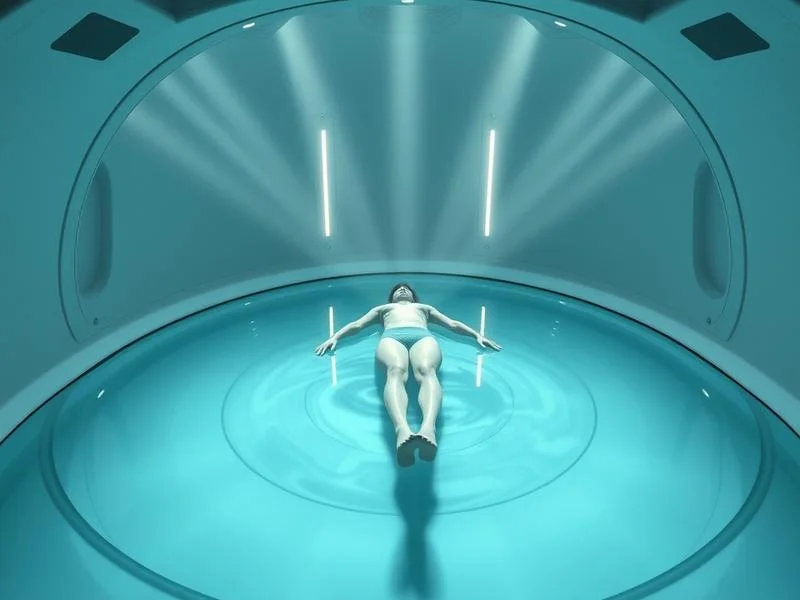
Midjourney is building a body scanner. On June 18, CEO David Holz announced the Midjourney Scanner — a full-body ultrasound device that places a person in a shallow water pool surrounded by 500,000 ultrasonic sensors, producing a complete body scan in approximately 60 seconds. No radiation, no magnetic fields, no claustrophobic tube.
Holz’s claim is dramatic: fewer than a dozen of these units operating at capacity could outperform every MRI machine on Earth combined in terms of throughput. MRI scanners typically take 15–45 minutes per session and require specialized facilities. A 60-second full-body scan changes the economics of preventive imaging entirely — if the technology works as described.
The sensor array is the key innovation. 500,000 ultrasonic transducers positioned in a circular configuration capture data from every angle simultaneously. Traditional ultrasound is handheld and directional; the Midjourney approach is volumetric and passive — the patient simply lies in the water. The AI component reconstructs the three-dimensional body map from the sensor data, a task that would be computationally impractical even five years ago.
Holz also announced a 25,000 sq ft Midjourney Spa in San Francisco — combining the scanner with hot tubs, saunas, cold plunges, and a gym. The facility is targeted for opening by end of 2027. The spa framing is intentional: Midjourney is positioning this as a consumer wellness experience, not a clinical device. That distinction matters for FDA regulatory timelines and market entry strategy.
The pivot is jarring on the surface. Midjourney built its reputation on generative image models. But the underlying competency is the same: large-scale AI models trained to reconstruct meaningful outputs from high-dimensional sensor data. Images from prompts, body maps from acoustic sensors — different modalities, same problem class.
Holz has been hinting at hardware ambitions for two years. This appears to be the materialization of that roadmap, starting with medical imaging as a beachhead category. Preventive health is a large market with slow incumbents, high procedure costs, and genuine consumer demand for accessible diagnostics.
The technical claims need independent validation before they can be taken as settled. But the combination of a functioning prototype demonstration, a concrete facility timeline, and a credible founder with capital means this is worth watching. If the throughput numbers are real, the Midjourney Scanner is not a side project — it’s a serious attempt to enter one of the most capital-intensive sectors in hardware.