Huawei's Ascend 950PR Wins ByteDance and Alibaba Orders as China Ditches Nvidia
ByteDance and Alibaba plan to place orders for Huawei's new Ascend 950PR chip after testing showed improved CUDA compatibility and inference speeds. Huawei targets 750,000 units shipped in 2026.
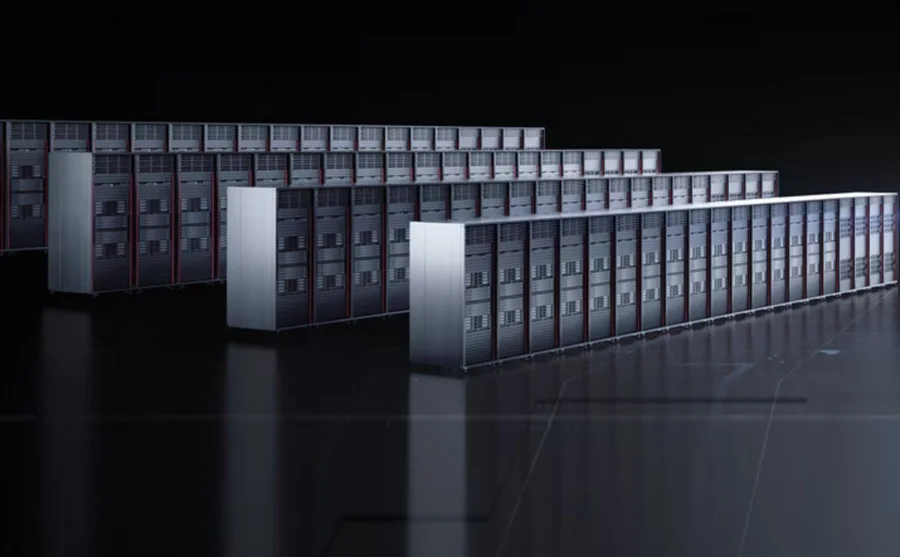
ByteDance and Alibaba are planning orders for Huawei’s new Ascend 950PR AI chip, according to three people familiar with the matter cited by Reuters on March 27. After years of government pressure to adopt domestic alternatives to Nvidia, China’s biggest AI companies are finally moving — because the hardware has caught up, not because regulators told them to.
What Changed with the 950PR
Huawei’s previous flagship, the Ascend 910C, struggled to convert private-sector interest into actual deployments. The 950PR addresses the two core complaints directly: CUDA compatibility and inference speed.
The chip won’t close the gap with Nvidia on raw training compute. Its spec sheet shows 1 PFLOPS FP8 and 2 PFLOPS FP4 performance — respectable, but not a Blackwell-class training monster. The 950PR is designed for inference workloads, where China’s demand is surging as the market shifts from model development to real-world deployment. For inference, CUDA compatibility matters more than peak FLOPs, and the 950PR’s improved compatibility with Nvidia’s CUDA toolchain means engineering teams don’t have to rewrite their entire inference stack to run on it.
Huawei’s own CANN framework supports PyTorch and Triton, providing an escape route from CUDA dependency, but the 950PR makes the transition less painful.
The Scale of the Bet
750,000 units planned for 2026 shipments. That’s a meaningful number for a chip cycle. ByteDance runs one of the world’s largest inference workloads through TikTok and Douyin; Alibaba Cloud is China’s dominant AI cloud provider. Both companies adopting the 950PR at scale gives Huawei the reference deployments it needs to push into the rest of the market.
Huawei has been building toward this for years. The Atlas 950 SuperPoD — showcased at MWC 2026 in Barcelona — connects up to 8,192 Ascend NPUs into a single logical system using Huawei’s UnifiedBus interconnect. The ecosystem is maturing.
The Geopolitical Engine
U.S. export controls are the underlying driver. Nvidia cannot sell H100 or H200 chips to Chinese customers under current rules, and Blackwell is entirely off the table. Chinese AI companies that want inference capacity at scale have limited options: domestic alternatives or smuggling, and the regulatory risk of the latter is increasingly untenable.
The 950PR doesn’t need to beat Nvidia. It needs to be good enough, available, and not a legal liability. It is all three.
What This Means for Nvidia
Nvidia’s revenue exposure to China has been shrinking under export controls, but inference demand was a market where the company still hoped to find workarounds through compliant lower-spec chips. ByteDance and Alibaba switching inference workloads to the 950PR closes that avenue. The China AI market is bifurcating into a domestic stack, and the 950PR is the first chip capable enough to make that bifurcation permanent.
Source: Reuters via CNBC — cnbc.com/2026/03/27/bytedance-alibaba-planning-to-order-huaweis-new-ai-chip-reuters.html, March 27, 2026