ByteDance Set to Order 50,000 AI Inference Chips from Shanghai Startup Iluvatar CoreX
ByteDance is finalizing a deal to purchase at least 50,000 AI inference GPUs from Iluvatar CoreX, a Shanghai-based chip company that listed in Hong Kong in January. The move adds a third domestic supplier to ByteDance's growing Chinese chip lineup as US export controls tighten.
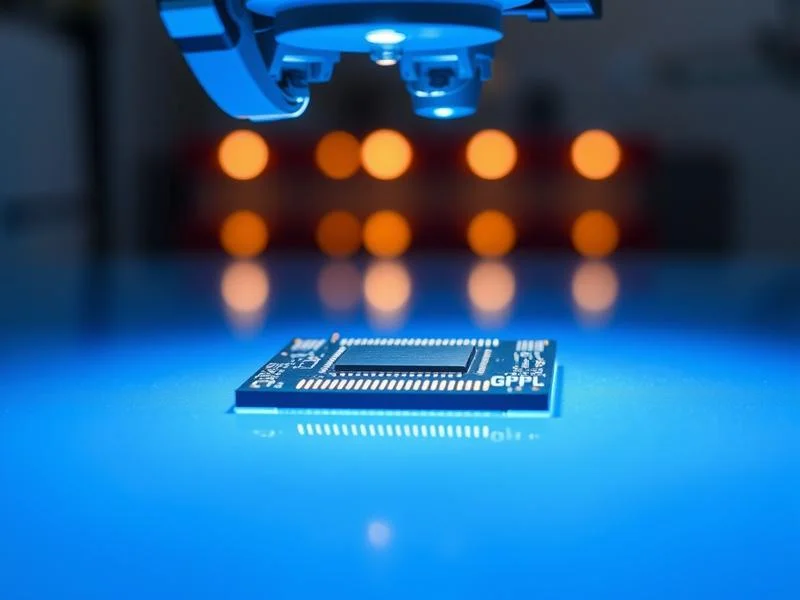
ByteDance is finalizing a deal to purchase at least 50,000 AI inference GPUs from Iluvatar CoreX, a Shanghai-based chip company that listed on the Hong Kong Stock Exchange in January 2026. Reuters broke the exclusive on June 15; neither company has publicly commented.
The chips are targeted at inference workloads — specifically running Doubao, ByteDance’s consumer AI chatbot, across its massive user base. Inference is the less hardware-hungry half of the AI pipeline: it answers user queries rather than training models. That makes it the natural entry point for domestic Chinese alternatives that can’t yet match NVIDIA’s flagship accelerators for training runs.
If the deal closes, Iluvatar CoreX becomes ByteDance’s third domestic GPU supplier, alongside Huawei and Cambricon. ByteDance is simultaneously evaluating Baidu’s Kunlunxin chips as a potential fourth source, according to people familiar with the matter. The procurement strategy is deliberate: spread orders across multiple vendors to avoid dependence on any single domestic supplier while building leverage against all of them.
Iluvatar’s flagship line is positioned as an alternative to NVIDIA’s A100 and A800 — the exact models US export controls have blocked from China since 2022. The company posted roughly 1 billion yuan ($148 million) in 2025 revenue, with about 90% coming from GPU sales. Until now, almost all of that came from government procurement. A ByteDance contract would be its first major commercial validation at hyperscaler scale and a meaningful revenue step-change.
The 50,000-chip figure is described as an expectation for 2026, not a signed purchase order. Still, even as a soft commitment, it sends a clear signal about China’s domestic chip ecosystem — and how far it has come.
The broader context: US export controls on advanced AI chips have forced China’s largest tech companies to build alternative supply chains, while NVIDIA navigates the restrictions without fully ceding its dominant market position. The result is a parallel GPU ecosystem forming inside China — slower, less capable for large training runs, but advancing faster than most observers expected. ByteDance’s Doubao has emerged as one of the most downloaded AI apps globally, putting real compute pressure on the company. Inference chips that are 70–80% as capable as NVIDIA’s best, at a fraction of the geopolitical risk, are increasingly viable.
What the deal doesn’t solve: training. For the frontier model training runs that determine where Doubao goes in six months, ByteDance still depends on hardware it has to source carefully. Iluvatar’s chips won’t change that calculation. But for the inference layer — serving billions of queries — domestic silicon is approaching “good enough.”
China’s semiconductor ecosystem is maturing faster than US policymakers anticipated when they first tightened the controls. This deal, if it closes, is another data point in that trend.