Trump Lands in Beijing With Jensen Huang, Tim Cook, and Elon Musk — AI Chips and Export Controls Top the Agenda
President Trump arrived in Beijing for a three-day summit with Xi Jinping, accompanied by 17 tech executives including Nvidia's Jensen Huang, Apple's Tim Cook, and Tesla's Elon Musk. Nvidia's ability to sell AI chips in China and the trajectory of the US-China tech cold war are the central issues.
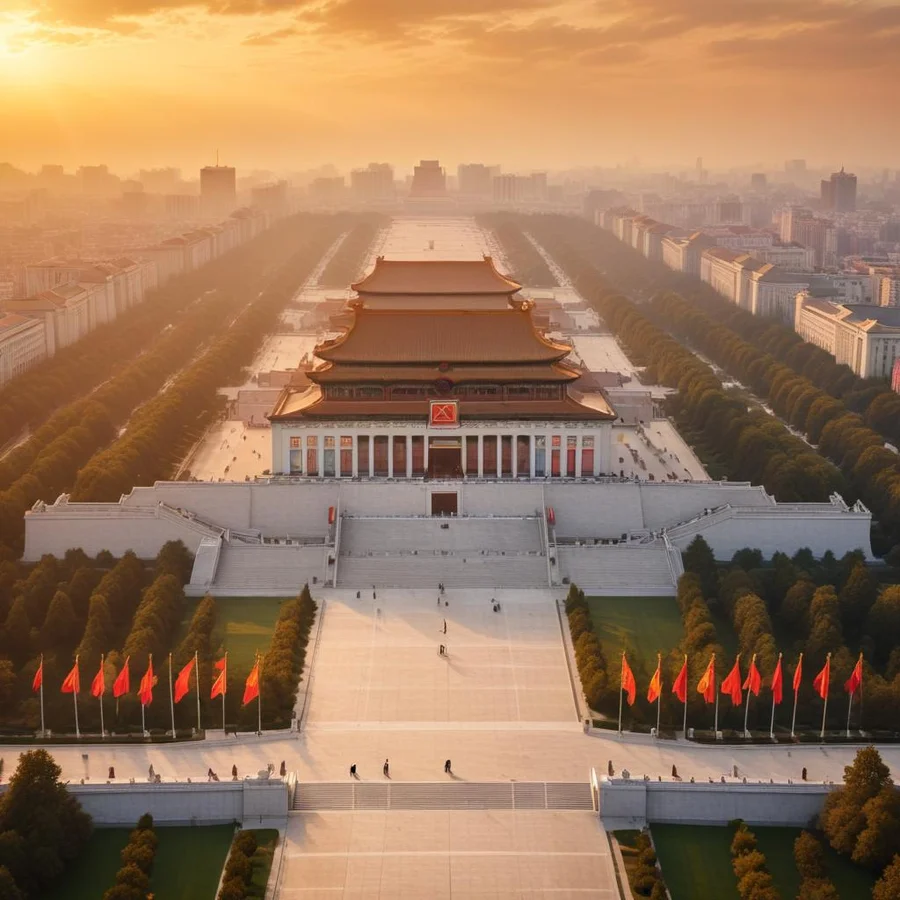
President Trump touched down in Beijing today for a three-day summit with Chinese President Xi Jinping, bringing along the most significant delegation of American tech executives to visit China in years. The 17-member business contingent includes Jensen Huang (Nvidia), Tim Cook (Apple), Elon Musk (Tesla), and leadership from BlackRock, Blackstone, Citi, Goldman Sachs, Mastercard, Micron, Meta, Qualcomm, and Visa.
The summit’s tech agenda centers on one irreducible problem: the US government has effectively cut Nvidia out of its largest potential market by restricting export of advanced AI chips to China. Nvidia’s H100, H200, and B100 series are all controlled under Bureau of Industry and Security rules. Huang’s presence in the delegation is not symbolic.
A semiconductor deal — allowing Nvidia to sell modified chips to Chinese customers — was floated in briefings ahead of the visit, but national security officials in the administration pushed back hard. The more likely outcome, according to analysts cited by Fortune and Rest of World, is an extension of the October 2025 trade truce and establishment of a bilateral US-China Board of Trade that creates a formal channel for tech commerce discussions without immediately resolving the chip question.
AI Warfare Is the Other Agenda Item
Beyond commercial chips, the summit is expected to include substantive discussions on AI-enabled military capabilities — a topic that has quietly escalated since China’s PLA tested autonomous targeting systems in exercises last year. Both sides want some form of guardrails. Neither wants to bind their own capabilities first.
The Euronews and Al Jazeera reporting ahead of the summit makes clear that AI warfare is more central to the agenda than any trade deal. That framing matters because it sets a harder floor on how much the US is willing to concede on chip access — loosening controls that feed into PLA AI development is a different calculation than allowing commercial sales to Alibaba Cloud.
What Each CEO Is Actually After
For Jensen Huang the calculus is straightforward: Nvidia needs China revenue, and China’s data center buildout — currently accelerating with Huawei’s Ascend 910B as the dominant alternative — is happening with or without Nvidia. Every quarter the controls hold, Huawei consolidates its position.
Tim Cook’s interest is different. Apple still manufactures the majority of iPhones in China despite aggressive diversification to India and Vietnam. Cook needs the bilateral relationship stable enough to protect that supply chain for at least another 18 months while non-China manufacturing capacity scales.
Elon Musk brings Tesla’s gigafactory in Shanghai — and SpaceX’s growing governmental entanglements. His presence in the delegation is interpreted in Beijing as a signal that the administration’s hawkish wing has not completely captured US tech policy.
Realistic Outcomes
Best case for Silicon Valley: the trade truce holds, some chip export restrictions ease for “commercial” applications, and tech companies regain partial access to China’s AI buildout. Worst case: talks collapse, the US tightens additional controls, and Huawei’s Ascend series completes its displacement of Nvidia in Chinese data centers.
Formal announcements are expected on May 14. The summit runs through May 15.