MiniMax's M2.7 Ran 100+ Autonomous Cycles to Help Train Itself
Chinese AI lab MiniMax released M2.7 on March 18, a model that autonomously executed over 100 iterative development loops — analyzing failures, rewriting its own scaffold code, and handling 30–50% of its reinforcement learning research workflow without human intervention.
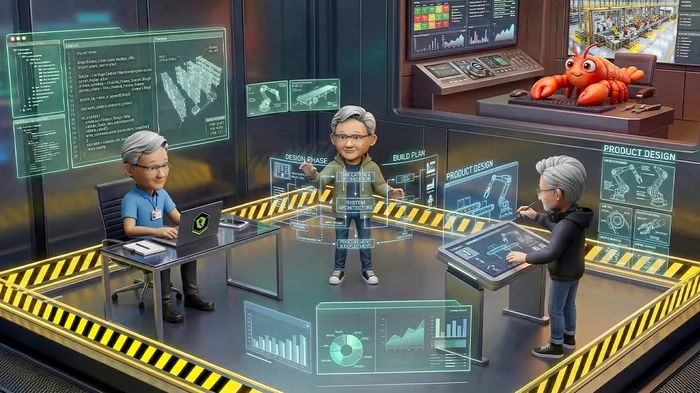
MiniMax released M2.7 on March 18 with a claim that deserves close reading: the model ran over 100 autonomous development cycles during its own training, handling 30 to 50 percent of the reinforcement learning research workflow without human input. The loop looked like this — analyze failure trajectories, plan changes, rewrite scaffold code, run evaluations, compare results, decide to keep or revert — repeated more than a hundred times before the final model shipped.
That’s not a marketing abstraction. It’s a concrete claim about recursive self-improvement in production, the kind of thing AI researchers have theorized about for years. MiniMax is the first commercial lab to publish details on deploying it at scale inside an actual training pipeline.
The benchmark results are strong, especially for a model from a Chinese lab that doesn’t have Anthropic’s or OpenAI’s brand recognition in Western markets. M2.7 scores 56.22% on SWE-Pro, matching GPT-5.3-Codex. On Terminal-Bench 2.0 it hits 57.0%. On GDPval-AA for professional office tasks — document processing, spreadsheet work — it posts an Elo of 1495, which the company claims is the highest among open-source-accessible models.
The agent architecture is built for depth, not breadth. M2.7 ships with 40+ complex skills, each described in prompts of 2,000+ tokens. Skill adherence rate is 97%. The model supports dynamic tool search and multi-agent team coordination. This is explicitly designed for long-horizon agentic tasks, not single-turn generation.
MiniMax has been operating mostly under the radar outside China. M2.7 changes that posture. Self-evolving training pipelines, if they hold up under scrutiny, compress the development cycle significantly — fewer human researchers needed per training iteration, faster iteration on model behavior, lower overhead per improvement. That’s a structural advantage, not just a benchmark win.
The obvious question is reproducibility. A 30–50% autonomous R&D workload sounds transformative, but the details of what “R&D task” means in this context matter enormously. Still, publishing the methodology invites verification. If the numbers hold, M2.7 is a more significant release than its Western press coverage suggests.
Related reading
- AI Models Alibaba Previews Qwen3.8-Max, a 2.4-Trillion-Parameter Model It Says Trails Only Fable 5
- AI Models OpenAI's GPT-5.6 Targets Agentic Reasoning and Real-World Execution — GPT-4.5 Retires June 27
- AI Models Anthropic Ships Claude Fable 5: Mythos-Class Power With Guardrails, Crushing Every Coding Benchmark