Microsoft Signs 20-Year, $7B Natural Gas Deal With Chevron to Power Its Texas AI Megacampus
Microsoft and Chevron announced Project Kilby, a 20-year power purchase agreement worth $7 billion to supply 2.67 GW of dedicated natural gas electricity to Microsoft's Pecos, Texas data center campus. Operations begin in 2028.
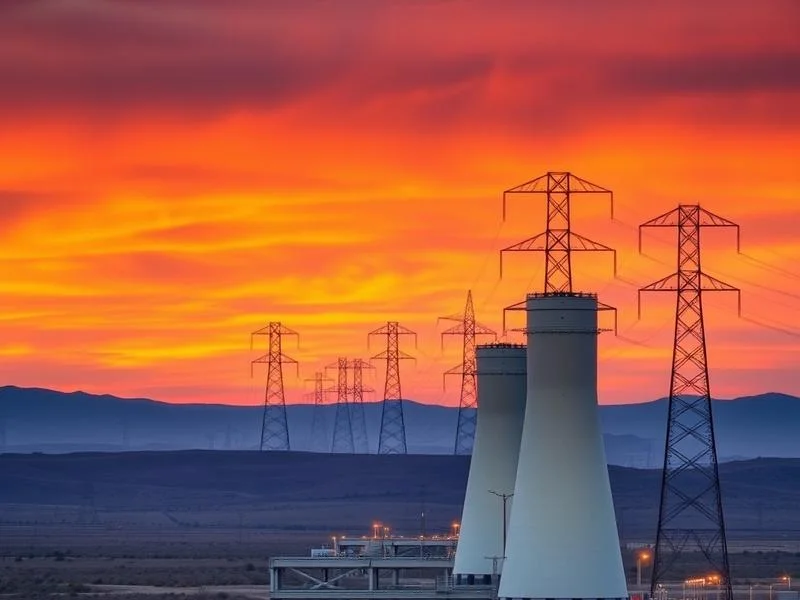
Microsoft is locking in its power supply for AI — for the next two decades.
On June 22, the company announced Project Kilby, a 20-year power purchase agreement with Chevron to supply dedicated natural-gas-fired electricity to its AI data center campus in Pecos, Texas. The project carries a total estimated cost of roughly $7 billion and will ramp to 2.67 GW of capacity — enough electricity to power more than 530,000 Texas homes — when fully operational in 2028.
The Partners
Chevron is developing Project Kilby alongside investment firm Engine No. 1 and GE Vernova, which will supply the majority of the gas turbines. Caterpillar’s Solar Turbines subsidiary will provide additional generation capacity. The site spans more than 2,000 acres in Reeves County, near the city of Pecos — deep in West Texas’s Permian Basin.
Chevron expects to reach a final investment decision before the end of 2026.
Why This Is Happening
AI data centers are unlike traditional cloud infrastructure. They run GPU-dense racks that draw enormous amounts of power at high density and need that power to be both reliable and available at scale. The public grid in West Texas, while served by ERCOT, isn’t designed for the kind of concentrated, always-on load that a 2+ GW campus demands.
Microsoft’s answer is behind-the-meter generation: a dedicated power plant physically co-located or directly connected to the campus, bypassing grid congestion and transmission constraints. The 20-year contract structure also gives Microsoft long-term cost certainty at a moment when AI capital expenditure is ballooning.
The company’s projected AI infrastructure spending has reached a level where the economics of building your own power supply, rather than purchasing it from utilities, begin to make sense.
The Climate Tension
Natural gas is not renewable. The announcement drew immediate scrutiny from environmental groups, who noted that a 2.67 GW gas plant locked in for 20 years runs counter to net-zero commitments Microsoft has made for 2030.
Microsoft did not respond to questions about how Project Kilby squares with those targets. The company has previously argued that natural gas bridging is necessary while renewables and grid battery storage scale, but a 20-year PPA is a structural commitment, not a bridge.
TechCrunch noted that dedicated behind-the-meter gas generation is becoming a pattern across hyperscalers — a sign that grid infrastructure and renewable supply are simply not keeping pace with AI power demand.
The Bigger Picture
Project Kilby is one data point in an accelerating trend. FERC recently ordered all six U.S. grid operators to fast-track AI data center connections, a recognition that existing grid infrastructure is a bottleneck. Hyperscalers are increasingly solving that bottleneck by going around the grid entirely — securing dedicated generation, often fossil-fueled, to meet AI workloads that cannot wait.
The AI infrastructure arms race is now a power arms race too.
Sources
Related reading
- Big Tech Microsoft's 'Rule of 70' Opens a Voluntary Exit for 8,750 U.S. Employees — Full Package Revealed May 7
- Cloud & Infrastructure Nvidia Backs $105B in Financing for OpenAI's Ohio Data Center — Its Largest Compute Commitment Yet
- Hardware AMD Locks Up 2.5 Gigawatts of AI Data Center Capacity in $14 Billion Core Scientific Deal