Cursor Quietly Built Its New AI Coding Model on Top of China's Kimi
Cursor launched Composer 2 as a homegrown 'frontier-level' coding model — then the community noticed it was trained on Moonshot AI's open-source Kimi k2.5. The company's co-founder admitted it was 'a miss' not to disclose the Chinese base model upfront.
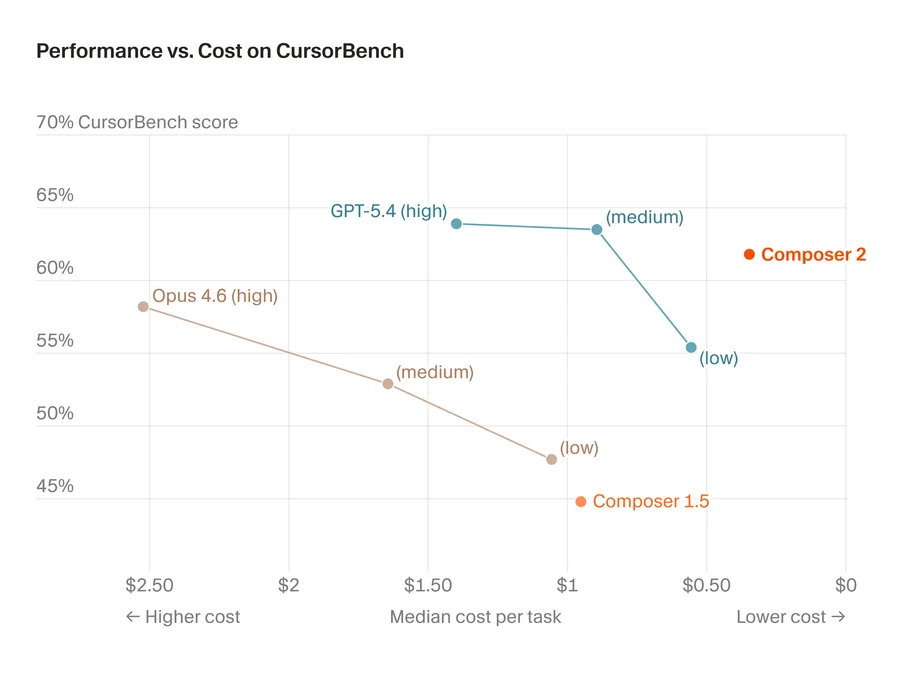
Cursor shipped Composer 2 on March 18 with a confident blog post promising “frontier-level coding intelligence” and strong CursorBench scores. It took less than 24 hours for the community to figure out what Cursor had not said: the model started life as Kimi k2.5, the open-source coding model released in January by Moonshot AI, a Chinese startup backed by Alibaba and HongShan.
An X user posting under the name Fynn spotted model-ID strings in the code that pointed directly at Kimi and posted the finding publicly. “At least rename the model ID,” they wrote. The thread spread fast — partly because Cursor is no small player. The company raised a $2.3 billion round last fall at a $29.3 billion valuation and is reportedly clearing $2 billion in annualized recurring revenue. Hiding a dependency on a Chinese open-source base felt like an odd move for a company that size.
Cursor’s vice president of developer education Lee Robinson moved quickly to acknowledge the situation. He confirmed that Composer 2 “started from an open-source base,” but pushed back on the framing that it was simply Kimi with a new name. He said roughly three-quarters of the compute spent training the final model came from Cursor’s own continued pretraining and reinforcement learning on top of the Kimi k2.5 base, making the benchmark performance “very different” from the original model.
Moonshot AI’s official X account leaned into the news rather than distancing itself. “We are proud to see Kimi-k2.5 provide the foundation,” it posted, adding that the collaboration ran through an authorized commercial partnership via Fireworks AI.
Co-founder Aman Sanger was more straightforward: “It was a miss to not mention the Kimi base in our blog from the start. We’ll fix that for the next model.”
The episode lands in a politically charged moment for U.S.–China AI relations. Silicon Valley has been rattled since early last year, when DeepSeek released a competitive reasoning model that triggered genuine alarm about the gap between Chinese and American frontier AI. Building on Chinese open-source weights — even legally, even with heavy subsequent training — is the kind of thing U.S. AI companies are not eager to publicize.
Cursor’s CursorBench results for Composer 2 look solid regardless of the base model. The scatter plot comparing speed, cost, and accuracy places Composer 2 favorably against other frontier-class models for agentic coding tasks. The debate over how much originality is required for a model to be genuinely “yours” isn’t going away, but the practical takeaway is more mundane: open-source licensing allows this kind of build-on-top approach, and Cursor followed the rules.
What it failed to do was communicate clearly. In a market where developer trust is a core product differentiator — and where the geopolitical sensitivity of AI supply chains is only increasing — transparency about training lineage is table stakes. Cursor knows that now.