China Readies $295 Billion Plan for a Nationwide AI Data Center Network Built on Domestic Chips
Beijing is preparing a 2-trillion-yuan, five-year program to build a unified national AI computing network operated by China Mobile and China Telecom. Huawei and other domestic suppliers are expected to provide at least 80% of the technology.
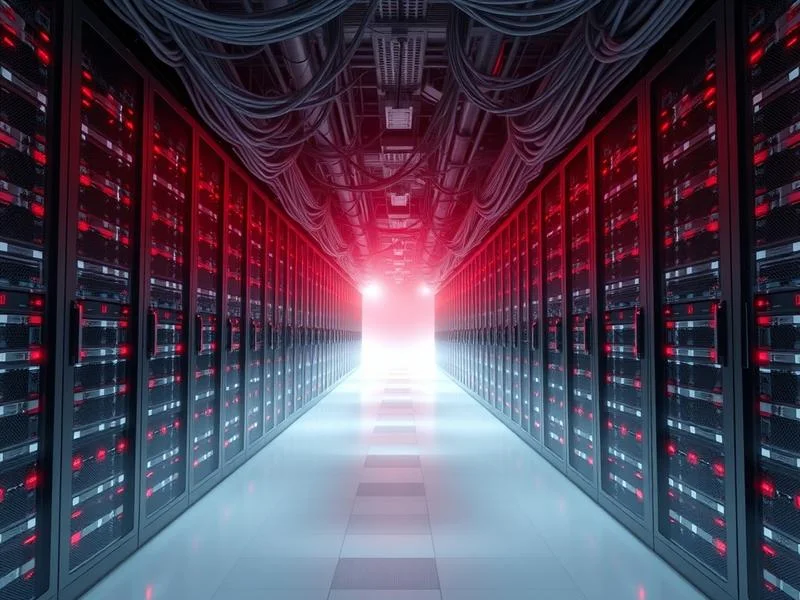
China is preparing to spend roughly 2 trillion yuan — about $295 billion — over the next five years to build a nationwide network of AI data centers, Bloomberg reported on June 9. The goal: a unified national computing environment by 2028, stitched together from resources currently scattered across provinces, agencies, and companies.
The structure is unmistakably state-driven. China Mobile and China Telecom, both state-owned carriers, would operate much of the infrastructure. Domestic suppliers — Huawei chief among them — are expected to provide at least 80% of the underlying technology. Funding would come from sovereign debt, state-backed investment vehicles, bank financing, and potential participation from large private players like Alibaba.
The chip layer is the most consequential part. In May, Beijing approved nine categories of domestically developed AI accelerators from Huawei, Alibaba, Biren Technology, and Moore Threads for deployment across government and security-sensitive sectors. The $295 billion buildout is, in effect, a guaranteed five-year order book for those chips. US export controls were designed to slow China’s AI progress by cutting off NVIDIA’s best silicon; the observable result is the largest state-funded buyer-of-first-resort program for domestic alternatives ever assembled.
Scale comparisons put the number in context. The US Stargate project announced $500 billion over four years, but that is private capital from OpenAI, Oracle, and SoftBank chasing commercial returns. SoftBank separately committed €75 billion to French data centers last week. China’s plan is smaller than Stargate on paper but centrally coordinated, which historically matters more for infrastructure: one planner deciding where power, land, and fiber go eliminates the permitting and interconnection fights that delay Western data center projects by years.
The unified-network design is the technically interesting bet. Rather than hyperscaler-style regional clouds competing for workloads, China wants a single national fabric where compute is allocated like grid electricity — an extension of the “East Data, West Computing” program that already routes eastern workloads to western provinces with cheap power. If it works, Chinese AI labs like DeepSeek, Moonshot, and MiniMax get access to pooled national compute without each raising tens of billions for their own clusters — a structural cost advantage no Western lab has.
The open question is the silicon gap. Huawei’s Ascend line still trails NVIDIA’s Blackwell and Rubin generations on performance per watt, and 2 trillion yuan of data centers filled with second-best chips is still second-best compute. But MiniMax’s M3 and DeepSeek’s recent models have shown Chinese labs squeezing frontier-adjacent results from constrained hardware. Beijing is betting $295 billion that efficiency plus scale closes the rest of the distance.